
Science & Technology
Billion-Dollar Sensor Opportunities | Pressat


[ad_1]
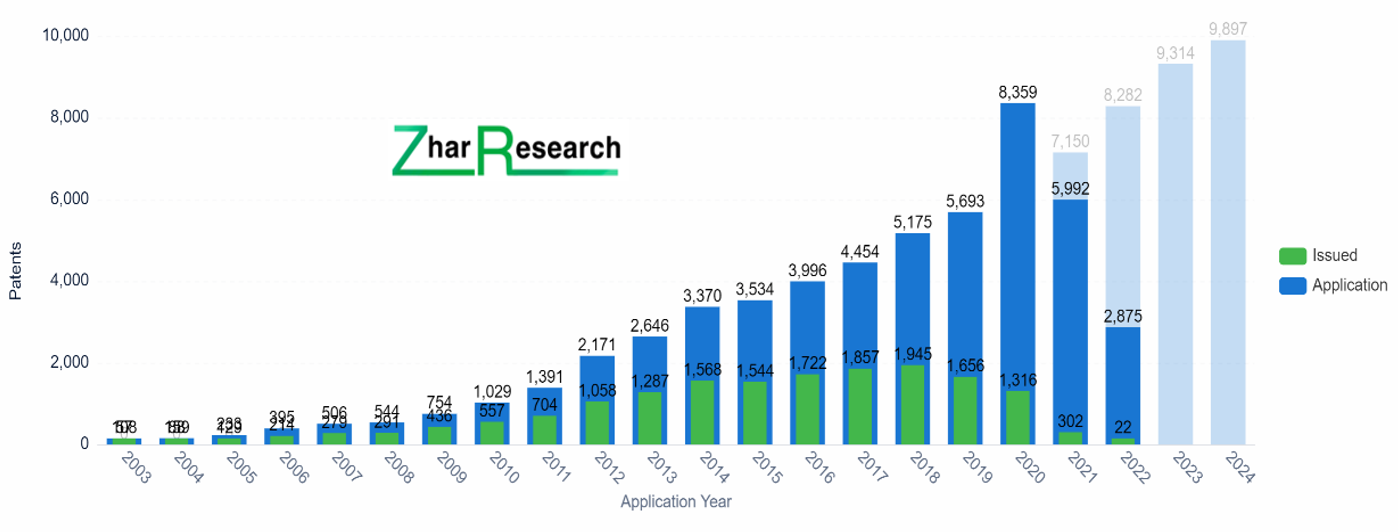
There are plenty of billion-dollar-plus sensor businesses already. The top 15 sensor manufacturers have $45 billion in such activity if we include the value of sensors they manufacture for use in their own products. What next? The New Zhar Research report, “Sensor Materials and Systems Markets 2023-2043” has the detail. It takes its cues from specific patent trends, the latest research pipeline, the future of the user industries, insider viewpoints and more. It finds some trouble ahead, limiting overall growth to 3% CAGR with some declining sectors but others growing very rapidly, so careful selection will be essential.
For example, automotive and energy have been large markets for sensors but electrification reduces parts by up to 99% and fuel supply chains vanish, eliminating sensors from mine to burner. Well within 20 years, sensors for the fossil-fuel heritage will be circling the drain. This will be despite latest forecasts by the EIA and S&P predicting oil and gas sales holding up on what Shakespeare called, “the primrose way to the everlasting bonfire”.
Fastest growing sectors
Zhar Research sees most other sectors growing faster and telecommunications sensors – including those incorporated into client devices such as Internet of Things nodes – eventually becoming the largest sensor market sector by value. Overall, in 2043, expect a massive $232 billion business just for sensor hardware.
Electromagnetic wins
Cutting it by technology, electromagnetic sensing will lead at $52 billion. It will involve microwave, terahertz/ far-infrared, near-infrared, visible and ultraviolet sensing that determines magnitude, change, spectrum analysis or imaging. There will also be use of electromagnetic radiation to monitor temperature, distance and so on.
However, care is needed. For example, the largest potential market for LIDAR sensors was supposed to become automotive but market leader Tesla does not use them. No ultrasound either. Recently, several major car manufacturers, loaded with debt, have dropped their autonomous vehicle programs, LIDAR included.
Large new markets
The twenty-year viewpoint is essential to capture the large new markets being created. They include such things as new heavy industry in the form of long-duration grid storage (liquid air, compressed air etc.) and 6G Communications which includes that new terahertz market.
Zhar Research has a close look at design trends and the research pipeline but also industry dynamics to form its predictions. For example, smartphone sales dropped 12% last year and an increasingly global recession will not help them rise again. On the bright side, 6G Communications will later transform the capability and desirability of smartphones and other client devices. In a multiplier of growth, the number of sensors in a smartphone, smart watch and so on will double. 6G will particularly boost sensor sales in its Phase 2 around 2035 when it becomes largely optical and also enables vast numbers of battery-less client devices full of sensors – or such is the intention. See Zhar Research report, “6G Communications: Optical Materials and Components Markets: Visible, Near IR, Far IR from 0.3THz 2023-2043“.
Needs to be avoided and those to prioritise
Those hoping to create a billion-dollar sensor business from yesterday’s sectors will be disappointed. They include coal, oil and gas fuel and vehicles and generators using fossil fuels. That is despite some initial growth. Better to address such sectors as bionic man and woman, the expected 500 million with diabetes, unmanned factories, mines and aircraft, even robot ships and unmanned farming.
Nuanced opportunities
Dr Peter Harrop CEO of Zhar Research adds,
“There are also more nuanced opportunities from such things as multifunctional sensors and more sensor fusion where software makes several sensors greater than the sum of the parts. This is biomimetics mimicking how your body works. It will include smart skin as structural electronics performing more than just sensing. Some sensing business will transmute into smart material feedstock.”
He adds,
“Then there is the vision of an Internet of Senses based on devices, sensors, actuators and context-aware applications. It is intended to make our digital experiences richer, involving all our senses, and ultimately merging the digital and the physical worlds – or so they say. How much actual business that creates over the next twenty years remains to be seen. ”
Technology excellence ahead
Certainly, in planning your next billion-dollar sensor business you would do well to track leading technology trends such as miniaturised and integrated sensors, selling the associated software and systems as well. For instance, startup Senbiosys utilizes six photoplethysmogram (PPG) sensors in its new smart ring plus 18 microLEDs which provide the returned light they utilise. When paired with an accompanying smartphone app, data gathered by the ring’s PPGs, thermometer and accelerometer are used to determine the wearer’s heart rate, respiration rate, step count, body temperature, blood oxygen level, sleep quality, stress level and calories burned. Another new example is MIT MechSense. This is showing the way by 3D printing of wireless sensors directly into rotating parts.
Learn from the best
Many emerging sensor manufacturers are identified in the new report. Some have formidable innovation in the best sectors but no in-house sales. Consider them as possible acquisitions, sources or partners. Learn from existing well-run sensor businesses such as $3.8 billion Sensata Technologies (strapline “sensing is what we do”) and TE Connectivity. For example, TE will rise with its choice of aerospace, military, industrial, medical and air-conditioning sensor systems boosted by global warming by the fact that emerging economies are mostly in tropical regions. Sensata focus wisely includes sensors for the electrification of vehicles and the power grid. They succeed without being top patentors of sensors, though patenting remains important. Heavy sensor patentor Sony shrewdly prioritises sensors for electric vehicles, robotics, personal electronics and, like Sensata, deliberately prioritising very advanced sensor technologies. Teledyne is also very much up-market in its billion dollar sensor activity.
Lessons of poor positioning
Set against this, Zhar Research identifies some top patentors that are not in a strong position for the future because they are too reliant on imperilled market sectors, having earnings, profits or patenting trending down and failing to lead competition in sensor technology or use.
Big picture essential
The report is unusual in looking at the whole sensor business because your opportunities may be wider than you think. It closely covers companies selling to themselves and selling custom sensors because the catalog sensor business is only the tip of the iceberg. The booming business in image sensors is a strong example of in-house and custom uses.
League table for the future
The Zhar Research supplier league tables are based on forward-looking criteria such as sensor patenting amount and trend, focus on growth sensors markets, innovation, sales and in-house use. Zhar Research rates Samsung top sensor company for 2023-2043 on current evidence. It makes the Tesla embedded cameras and the sensors for its smartphones that outsell everyone but it is also expanding in medical sensing and more. However, sensor-outsiders Apple and Qualcomm now patenting sensors like there is no tomorrow. Qualcomm newly offers a Snapdragon Digital Chassis as the heart of sensors and most else in electric vehicles. For more see Zhar Research report, “Sensor Materials and Systems Markets 2023-2043“.
[ad_2]
Source link





Science & Technology
Momentum Builds to Curb AI Development Amid Safety Concerns
Tech leaders advocate for slowing AI progress to mitigate risks and ensure safety.


On Saturday, September 12, 2026, Anthropic CEO Dario Amodei published an essay titled “We Must Pace the Frontier”, calling on the AI industry to deliberately slow the development of its most advanced models. He proposed a three-part plan, starting with giving independent third-party evaluators “employee-like access” to developers’ internal work. Within hours, xAI owner Elon Musk posted “Dario is right,” and OpenAI CEO Sam Altman said he agreed the industry needed to “pace the frontier”, committing OpenAI to welcome independent evaluators. The rare alignment reflects a burgeoning movement within the technology community. The aim is to ensure that AI advancement does not outpace the necessary safety measures that must be in place to protect society. Musk, known for his outspoken concerns regarding AI, has been vocal about the potential existential threats posed by unchecked AI development. His stance is not without precedent. In past years, he has been an advocate for AI regulation, emphasizing the importance of establishing robust safety protocols. Sam Altman shares this concern. As a key figure in AI innovation, Altman’s support for decelerating AI progress highlights the industry’s internal awareness of its own vulnerabilities. Altman has been instrumental in shaping AI discussions, both as a developer and a policymaker. His involvement underscores a critical shift in perspective among those who once championed AI’s limitless potential.
Amodei’s essay warned that AI capabilities had been advancing drastically faster since the summer, and argued that buying even an extra year or two to work on alignment could greatly reduce the risk of something going seriously wrong. As CEO of Anthropic, Amodei’s insights into AI’s capabilities are profound. He has long advocated for responsible AI development, emphasizing research into AI safety and alignment. His company, Anthropic, is at the forefront of AI safety research, making his voice particularly influential. Amodei’s concerns are grounded in the belief that AI systems need to be designed with alignment and transparency as core principles. The consensus among these leaders is clear. The pace of AI development must be moderated to prevent potential societal disruptions. The public discourse around AI safety has evolved significantly over the past few years. Initially, concerns were often dismissed as speculative or alarmist. However, as AI systems become more integrated into daily life, their impact is undeniable. From autonomous vehicles to intelligent personal assistants, AI technologies influence countless aspects of modern existence. The rapid integration has outpaced regulatory frameworks, leaving gaps that could potentially be exploited.
This movement to slow AI development is gaining traction within the tech community. It reflects a deeper understanding of the potential risks and ethical considerations that come with advanced AI systems. Industry leaders are increasingly aware of their responsibility to mitigate these risks. There is a growing consensus that more comprehensive safety measures and regulatory oversight are necessary. The call for a slowdown is not a demand to halt innovation. Rather, it is a plea for a more deliberate approach to AI development. The goal is to establish a regulatory framework that prioritizes safety, ethical considerations, and long-term societal impact. This approach seeks to ensure that AI technologies are developed responsibly and with foresight. The motivation behind this push is multifaceted. At its core is the desire to prevent unintended consequences that could arise from unchecked AI advancement. These include potential job displacement, privacy concerns, and the risk of AI systems being used for malicious purposes. The tech industry is increasingly aware that the societal implications of AI are vast and complex. There is a recognition that addressing these challenges requires collaboration across sectors and disciplines.
The momentum to slow AI development also reflects a shift in how technology leaders view their role in society. There is a growing acknowledgment that technological innovation must be balanced with ethical responsibility. This recognition is driving the call for more stringent safety protocols and regulatory oversight. As the debate around AI continues, the voices advocating for caution are becoming more prominent. The movement is gaining momentum, supported by influential figures and organizations committed to ensuring that AI development proceeds safely and responsibly. The challenge now is translating this momentum into actionable policies and frameworks. Governments and regulatory bodies must work closely with industry leaders to develop comprehensive guidelines that address the unique challenges posed by AI. This collaboration is essential to fostering innovation while safeguarding societal interests. The path forward requires a collective effort to balance progress with prudence. As AI continues to evolve, the need for thoughtful and responsible development becomes increasingly critical. The calls to slow down AI development are a testament to the industry’s commitment to navigating this complex terrain with care.
The journey ahead is not without challenges. Implementing effective regulatory measures will require cooperation and consensus among diverse stakeholders. However, the growing momentum to address AI safety concerns offers hope for a future where technological advancement is aligned with societal well-being. As industry leaders and policymakers work together, there is potential to shape a future where AI technologies enhance, rather than disrupt, the fabric of society. The commitment to responsible AI development is key to ensuring that AI technologies are harnessed for the greater good. This forward-thinking approach will be crucial in defining the next chapter of AI innovation. The momentum to slow down AI development is more than a precautionary measure. It is a strategic decision to prioritize safety, ethics, and long-term impact. As the conversation around AI continues to evolve, the focus on responsible development will remain at the forefront. The future of AI depends on the choices made today. By embracing a more measured approach, the tech community can pave the way for a future where AI serves humanity’s best interests.
Science & Technology
Quantum Computing Breakthroughs: Disrupting Industries with Oxford’s Innovations
A recent breakthrough in quantum computing at the University of Oxford promises to disrupt multiple industries by significantly enhancing computational capabilities. Explore the technological implications and potential disruptions poised to redefine sectors.

In May 2026, the University of Oxford announced a significant breakthrough in the field of quantum computing, unveiling an advanced error correction algorithm that has the potential to transform computational capabilities. This development is not just a scientific triumph; it heralds a new era of technological disruption across multiple industries. Quantum computing, long anticipated as the next frontier in technology, promises to solve complex problems beyond the reach of classical computers, and Oxford’s latest advancement brings this closer to reality.
At the core of this breakthrough is the enhancement in quantum error correction, a critical component that addresses the inherent instability of qubits, which are the fundamental units of quantum information. Traditional computers use bits of 0s and 1s, but quantum computers operate on qubits, which can exist in multiple states simultaneously. This superposition allows quantum computers to process information exponentially faster than classical computers. However, qubits are notoriously prone to errors due to environmental noise and operational inaccuracies. Oxford’s new algorithm significantly improves the error correction process, maintaining qubit stability longer and allowing extended computational tasks to be performed accurately.
The implications of this are profound. Industries ranging from pharmaceuticals to finance stand on the cusp of disruption as quantum computing offers the ability to model complex molecular structures, optimize large-scale financial portfolios, and even revolutionize artificial intelligence algorithms. In pharmaceuticals, for example, quantum computing can expedite drug discovery by accurately simulating molecular interactions, potentially reducing the time and cost associated with bringing new drugs to market. Similarly, in finance, quantum algorithms can optimize trading strategies and risk management with a precision unattainable by current technologies.
Moreover, the ripple effects of such a leap in computational power extend to data encryption and cybersecurity. Quantum computers possess the potential to decrypt classical encryption methods, prompting a race for quantum-resistant cryptography. This necessitates a paradigm shift in how we secure digital information, affecting every sector that relies on data security.
Despite the tremendous promise, the transition to quantum computing is not without its challenges. The infrastructure required to support quantum technologies is expensive and complex. There is also a significant skills gap; experts in quantum computing are scarce, and training a new generation of scientists and engineers is imperative. Furthermore, ethical considerations regarding the power of quantum computing must be addressed, particularly in terms of privacy and security.
Looking forward, as quantum computing continues to evolve, industries will need to adapt swiftly to harness its capabilities. Early adopters who invest in quantum technologies and develop quantum-ready strategies will likely dominate in the coming decade. As Oxford’s breakthrough demonstrates, the race is on to fully realize the potential of quantum computing and redefine the boundaries of what is technologically possible.
Science & Technology
Apple’s AI Innovations: Shaping the Competitive Landscape in 2026
Apple’s latest advancements in artificial intelligence are setting the stage for a competitive showdown with other tech giants. This article explores how Apple’s AI strategy is positioning the company in the fast-evolving tech landscape.

In the bustling realm of technology, few companies command as much attention as Apple. In 2026, the Silicon Valley titan has once again captured the tech world’s gaze with its latest advances in artificial intelligence. As Apple unveils a suite of AI-driven innovations, the competitive landscape is poised for a seismic shift.
Apple’s strategic focus on AI is not merely about introducing new features but is a calculated move to redefine user experiences while maintaining its staunch advocacy for privacy. At the heart of Apple’s AI initiatives is the promise of personalization—an AI that learns and adapts to the user’s preferences, offering seamless interaction across its range of devices. This focus is especially pertinent in an era where user data is a hot commodity, and privacy concerns are at an all-time high.
What sets Apple apart in the AI race is its dual emphasis on innovation and privacy. While competitors like Google and Amazon have long been heralded for their AI prowess, often prioritizing expansive data collection to fuel their AI engines, Apple has carved out a niche by leveraging on-device processing. This approach not only mitigates privacy risks but also enhances real-time responsiveness, a crucial factor in user satisfaction.
The competitive implications of Apple’s AI advancements are profound. Google’s AI, renowned for its search and recommendation algorithms, faces a formidable challenger in Apple’s ecosystem-centric approach. Meanwhile, Amazon’s Alexa, which dominates the smart assistant market, must contend with Apple’s Siri, now equipped with enhanced contextual understanding and predictive capabilities.
Microsoft, another major player, has been making strides with its integration of AI in cloud services and productivity tools. However, Apple’s holistic approach—integrating AI across hardware, software, and services—presents a cohesive strategy that is difficult to replicate. This integration not only ensures a seamless user experience but also reinforces brand loyalty, a cornerstone of Apple’s business model.
As AI continues to evolve, the stakes in the tech industry are higher than ever. Apple’s innovations are not just about keeping pace but are strategically designed to place the company at the forefront of the AI revolution. In doing so, Apple is not only safeguarding its market position but is also setting new benchmarks in how technology can enhance and secure our digital lives.
The road ahead will undoubtedly see further advancements and competition, but Apple’s current trajectory suggests it is well-positioned to lead in the AI domain. By prioritizing user-centric design and privacy, Apple is not just participating in the AI race; it is setting the pace.
-
 Business & Finance2 years ago
Xella achieves significant progress in CO₂ emissions reduction, circular economy, and occupational safety
-

 Entertainment & Arts5 months ago
Drake’s ‘Iceman’: A Streaming Chart-Busting Success Story
-
 Environment & Nature1 year ago
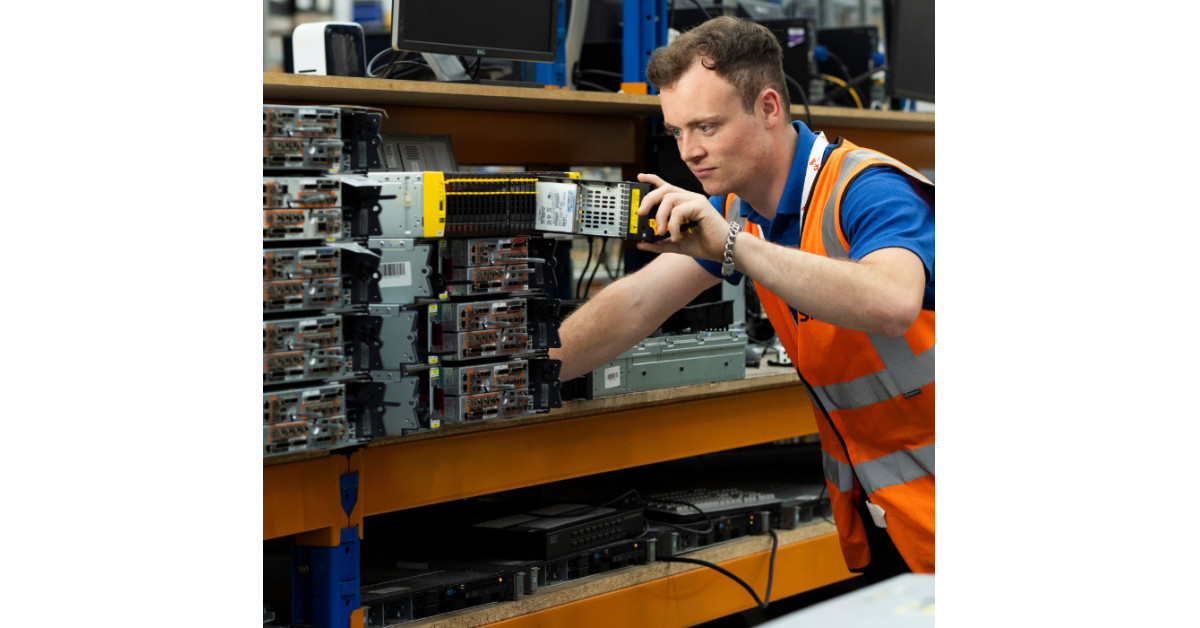
SK tes Launches New Circular IT Facility in Shannon, Expanding Ireland’s Role in Global Sustainable Tech Services
-

 Science & Technology5 months ago
Apple’s AI Innovations: Shaping the Competitive Landscape in 2026
-

 Business & Finance5 months ago
AI Revolutionizes Cryptocurrency Trading with Real-Time Analysis
-

 Business & Finance5 months ago
The Rise of Green Finance in Europe: Challenges and Limitations
-

 Entertainment & Arts5 months ago
The Cinematic Legacy of Michael Jackson: A Biopic Unveiled
-

 Business & Finance5 months ago
EU’s Regulatory Shift: A Boon for Small Tech Firms