
Science & Technology
Velocity One Signs Merger Agreement With EMCORE (EMKR)


[ad_1]
Transaction Will Unite Industry Leaders to Create an Emerging Force in the Aerospace and Defense Industry
FAIRFIELD, N.J., November 8, 2024 (Newswire.com)
–
Velocity One, a newly formed aerospace manufacturing holding company, announced today it has signed a merger agreement with EMCORE Corporation (Nasdaq: EMKR) (“EMCORE”), a provider of inertial navigation solutions to the aerospace and defense industry. Under the agreement, EMCORE will become a wholly owned subsidiary of Velocity One. The purchase price of $3.10 per share in cash, backed by Charlesbank Capital Partners (“Charlesbank”), a private investment firm with more than $22 billion of total assets*, has been unanimously approved by the EMCORE board of directors.
Velocity One will now have three industry leaders operating under its wing. In addition to EMCORE, it will comprise Cartridge Actuated Devices, Inc. (“CAD”), a 50-year veteran designer and manufacturer of energetic devices, and Aerosphere Power, a manufacturer of power system solutions for commercial and military aerospace, military ground vehicles, and UAV applications.
“We are excited to bring our playbook to EMCORE, as well as decades of experience operating aerospace and defense manufacturing and engineering businesses and optimizing their efficiency and profitability,” said John Borduin, CEO of Velocity One. “EMCORE has excellent technology and offers a large product portfolio. We believe this, combined with our industry experience and shared customer portfolio, puts EMCORE on a new trajectory for growth. With Charlesbank’s investment, EMCORE, CAD, and Aerosphere Power’s businesses can align and be poised for growth while focusing on our collective core philosophies.”
“We see a tremendous opportunity to bring together three leading aerospace manufacturing businesses to create a compelling new player in the market, and EMCORE’s highly engineered proprietary products will be key to driving the platform’s overall success,” said Brandon White, Managing Director at Charlesbank. “Velocity One’s talented and motivated management team has the industry expertise, entrepreneurial talent, and reputation necessary to drive meaningful growth at scale, and we remain excited to partner closely with them to execute our shared vision for the future of each business.”
Matt Vargas, CEO of EMCORE said, “This merger underscores our commitment to our domestic and international customer base, including strengthening relationships with and generating synergies across a range of high-priority U.S. and NATO defense programs and industrial partners served by all three companies. By combining our strengths with those of Velocity One, we believe EMCORE will be better positioned and resourced to address global customers’ evolving needs and deliver superior solutions. We look forward to the future as part of the Velocity One team.”
*Figure as of 6/30/24. Total assets reflects the total of (1) the fair market value (FMV) of investments held by the funds, including all related vehicles; (2) the FMV of investments held by entities included in the Fund IX Overage Program; (3) uncalled committed capital for each fund or related investment vehicle; (4) the FMV of investments held by third-party investors in Charlesbank-sponsored co-investment vehicles, including uncalled committed capital for such vehicles; and, (5) uncalled committed leverage available to the Charlesbank Credit funds.
Advisors
Skyway Capital Markets, LLC and Launch Point Partners, LLC are Velocity One’s buyside financial advisors, and Foley & Lardner LLP is its legal counsel.
Craig-Hallum Capital Group LLC is acting as exclusive financial advisor to EMCORE, and Pillsbury Winthrop Shaw Pittman LLP is serving as legal counsel to EMCORE.
About Velocity One
As a newly formed aerospace and defense platform, Velocity One brings together EMCORE, Cartridge Actuated Devices, and Aerosphere Power, all committed to delivering cutting-edge solutions and exceptional performance. This strategic combination positions Velocity One as a global leader in aerospace and defense, enabling the company to capture new opportunities, strengthen its market position, and expand its shared customer base. Visit Velocity One at www.velocity-one.com.
About EMCORE
EMCORE Corporation is a leading provider of inertial navigation products for the aerospace and defense markets. EMCORE leverages industry-leading Photonic Integrated Chip (PIC), Quartz MEMS, and Lithium Niobate chip-level technology to deliver state-of-the-art component and system-level products across our end-market applications. EMCORE has vertically-integrated manufacturing capability at its facilities in Budd Lake, NJ, Concord, CA, and Tinley Park, IL. EMCORE’s manufacturing facilities all maintain ISO 9001 quality management certification, and the company is AS9100 aerospace quality certified at its facilities in Budd Lake and Concord. For further information about EMCORE, please visit https://www.EMCORE.com.
About Charlesbank
Based in Boston and New York, Charlesbank Capital Partners is a middle-market private investment firm with more than $22 billion of total assets.* Charlesbank focuses on management-led buyouts, growth capital financings, opportunistic credit, and technology investments. The firm seeks to invest in companies with sustainable competitive advantage and excellent prospects for growth. For more information, please visit www.charlesbank.com.
Additional Information and Where to Find It
In connection with the proposed transaction among EMCORE Corporation (“EMCORE” or the “Company”), Velocity One Holdings, LP, Aerosphere Power Inc., and Velocity Merger Sub, Inc. (the “Proposed Transaction”), the Company will file relevant materials with the Securities and Exchange Commission (the “SEC”), including the Company’s proxy statement on Schedule 14A (the “Proxy Statement”). This press release is not a substitute for the Proxy Statement or any other document that the Company may file with the SEC or send to its shareholders in connection with the Proposed Transaction. Before making any voting or investment decisions, investors and security holders of the company are urged to read carefully and in their entirety all relevant documents filed or that will be filed with the SEC, including the proxy statement, as well as any amendments or supplements thereto, in connection with the proposed transaction when they become available because they contain or will contain important information about the company, the proposed transaction, and related matters. Investors and security holders will be able to obtain free copies of such documents (when available) through the website maintained by the SEC at http://www.sec.gov, or by visiting the Company’s website at www.emcore.com or by contacting the Company by email at [email protected].
Participants in the Solicitation of Proxies
The Company and certain of its directors and executive officers may be deemed to be participants in the solicitation of proxies in respect of the Proposed Transaction. Information about the directors and executive officers of the Company is set forth in: (i) the Company’s proxy statement for its 2024 annual meeting of shareholders under the heading “Proposal 1” (including “Election of Directors,” “Election of Directors—Recommendation of the Board of Directors,” “Election of Directors—Director Compensation for Fiscal Year 2023,” “Compensation Discussion and Analysis,” “Executive Compensation,” and “Ownership of Securities—Security Ownership of Certain Beneficial Owners and Management”), which was filed with the SEC on January 26, 2024 and is available at https://www.sec.gov/Archives/edgar/data/808326/000119312524016707/d561983ddef14a.htm; (ii) the Company’s Annual Report on Form 10-K for the fiscal year ended September 30, 2023, including under the headings “Item 10. Directors, Executive Officers and Corporate Governance,” “Item 11. Executive Compensation,” “Item 12. Security Ownership of Certain Beneficial Owners and Management and Related Stockholder Matters,” and “Item 13. Certain Relationships and Related Transactions, and Director Independence,” which was filed with the SEC on December 27, 2023 and is available at https://www.sec.gov/ix?doc=/Archives/edgar/data/0000808326/000080832623000031/emkr-20230930.htm; and (iii) to the extent holdings of the Company’s securities by its directors or executive officers have changed since the amounts set forth in the Company’s proxy statement for its 2024 annual meeting of shareholders, such changes have been or will be reflected on Initial Statement of Beneficial Ownership of Securities on Form 3, Statement of Changes in Beneficial Ownership on Form 4, or Annual Statement of Changes in Beneficial Ownership of Securities on Form 5, filed with the SEC (which are available at EDGAR Search Results https://www.sec.gov/edgar/search/#/category=form-cat2&ciks=0000808326&entityName=EMCORE%2520CORP%2520(EMKR)%2520(CIK%25200000808326)).
Other information regarding the participants in the proxy solicitations and a description of their direct and indirect interests, by security holdings or otherwise, will be contained in the Proxy Statement and other relevant materials to be filed with the SEC regarding the Proposed Transaction when such materials become available. Investors should read the Proxy Statement carefully when it becomes available before making any voting or investment decisions. Copies of the documents filed with the SEC by the Company will be available free of charge through the website maintained by the SEC at www.sec.gov. Additionally, copies of documents filed with the SEC by the Company will be available free of charge on the Company’s website at www.emcore.com.
Forward-Looking Statements
This press release contains “forward-looking statements” within the meaning of Section 27A of the Securities Act of 1933, as amended and Section 21E of the Securities Exchange Act of 1934, as amended related to the Company and the Proposed Transaction. All statements other than statements of historical fact are forward-looking statements for purposes of federal and state securities laws. These forward-looking statements involve risks and uncertainties that could significantly affect the financial or operating results of the Company. These forward-looking statements may be identified by terms such as “anticipate,” “believe,” “can,” “could,” “estimate,” “expect,” “forecast,” “foresee,” “intend,” “may,” “plan,” “project,” “should,” “target,” “will,” and “would” and the negative of these terms or other similar expressions. Forward-looking statements in this press release include, among other things, statements about the potential benefits of the Proposed Transaction, including future plans, objectives, expectations, and intentions, such as uniting industry leaders and creating an emerging force in the aerospace and defense industry, creating growth, driving success, and positioning and resourcing EMCORE to address customers’ needs and deliver solutions; and the structure of the Proposed Transaction. These forward-looking statements involve substantial risks and uncertainties that could cause actual results, including the actual results of the Company to differ materially from those expressed or implied by such statements. These risks and uncertainties include, among other things, risks related to the possibility that the conditions to the consummation of the Proposed Transaction will not for any reason be satisfied (including the failure to obtain the approval of the merger agreement for the Proposed Transaction (the “Merger Agreement”) by the Company’s shareholders) in the anticipated timeframe or at all; risks related to the ability to realize the anticipated benefits of the Proposed Transaction; the ability to retain and hire key personnel; negative effects of the announcement or failure to consummate the Proposed Transaction on the market price of the capital stock of the Company and on the Company’s operating results, including that the Company’s stock price may decline significantly if the Proposed Transaction is not consummated; the occurrence of any event, change or other circumstances that could give rise to the termination of the Merger Agreement, which in certain circumstances may require the Company to pay a termination fee; significant transaction costs, fees, expenses and charges; operating costs, customer loss, and business disruption (including, without limitation, difficulties in maintaining employee, customer, or other business, contractual, or operational relationships following the Proposed Transaction announcement or closing of the Proposed Transaction and the diversion of the attention of the Company management from its ongoing business); failure to consummate or delay in consummating the Proposed Transaction for any reason; risks related to the Company’s ability to manage existing cash resources for operations and continue as a going concern; risks and uncertainties related to sales of the Company’s businesses, assets, and product lines, and unanticipated adverse effects or liabilities from such divestitures; risks related to restructuring activities, including any resulting disruptions to the Company’s operations, and costs and expenses incurred, and resulting operational cost savings arising, in connection therewith; the Company’s ability to remediate the material weakness in its internal controls over financial reporting and its identification of any other material weakness that may adversely affect the accuracy and timing of the Company’s financial reporting; the rapidly evolving markets for the Company’s products and uncertainty regarding the development of these markets; dependence on customers or other third parties; difficulties in commercializing new products, including delays and the failure of new products to perform as expected, to be manufactured at acceptable volumes, yields, and cost, to be qualified and accepted by the Company’s customers, and to successfully compete with products offered by competitors; uncertainties concerning the availability and cost of commodity materials and externally-made specialized product components; actions by competitors; risks and uncertainties related to laws, regulations, and legal proceedings, including litigation matters relating to the Proposed Transaction or otherwise impacting the Company generally, including the nature, cost, and outcome of any litigation and other legal proceedings related to the Proposed Transaction that may be instituted against the parties and others following the announcement of the Proposed Transaction; acquisition-related risks; risks related to the conversion of order backlog into product revenue and the timing thereof; risks related to the financing of the Proposed Transaction; economic changes in global markets, such as inflation and interest rates, and recession; government policies (including policy changes affecting the technology and aerospace and defense industries, taxation, trade, tariffs, immigration, customs, and border actions) and other external factors that the Company cannot control; risks related to intellectual property, privacy matters, and cyber security (including losses and other consequences from failures, breaches, attacks, or disclosures involving information technology infrastructure and data); other business effects (including the effects of industry, market, economic, political, or regulatory conditions); and other risks and uncertainties, including, but not limited to, those described in the Company’s Annual Report on Form 10-K on file with the SEC and from time to time in other filed reports including the Company’s Quarterly Reports on Form 10-Q.
A further description of risks and uncertainties relating to the Company can be found in its most recent Annual Report on Form 10-K, Quarterly Reports on Form 10-Q, and Current Reports on Form 8-K, all of which are filed with the SEC and available at www.sec.gov.
There can be no assurance that the Proposed Transaction will in fact be consummated. If the Proposed Transaction is consummated, the Company’s shareholders will cease to have any equity interest in the Company and will have no right to participate in its earnings and future growth. The Company cautions investors not to unduly rely on any forward-looking statements, which speak only as of the date thereof. The Company does not intend to update or revise any forward-looking statements as the result of new information or future events or developments, except as required by law.
Source: Velocity One
[ad_2]
Source link




Science & Technology
Momentum Builds to Curb AI Development Amid Safety Concerns
Tech leaders advocate for slowing AI progress to mitigate risks and ensure safety.


On Saturday, September 12, 2026, Anthropic CEO Dario Amodei published an essay titled “We Must Pace the Frontier”, calling on the AI industry to deliberately slow the development of its most advanced models. He proposed a three-part plan, starting with giving independent third-party evaluators “employee-like access” to developers’ internal work. Within hours, xAI owner Elon Musk posted “Dario is right,” and OpenAI CEO Sam Altman said he agreed the industry needed to “pace the frontier”, committing OpenAI to welcome independent evaluators. The rare alignment reflects a burgeoning movement within the technology community. The aim is to ensure that AI advancement does not outpace the necessary safety measures that must be in place to protect society. Musk, known for his outspoken concerns regarding AI, has been vocal about the potential existential threats posed by unchecked AI development. His stance is not without precedent. In past years, he has been an advocate for AI regulation, emphasizing the importance of establishing robust safety protocols. Sam Altman shares this concern. As a key figure in AI innovation, Altman’s support for decelerating AI progress highlights the industry’s internal awareness of its own vulnerabilities. Altman has been instrumental in shaping AI discussions, both as a developer and a policymaker. His involvement underscores a critical shift in perspective among those who once championed AI’s limitless potential.
Amodei’s essay warned that AI capabilities had been advancing drastically faster since the summer, and argued that buying even an extra year or two to work on alignment could greatly reduce the risk of something going seriously wrong. As CEO of Anthropic, Amodei’s insights into AI’s capabilities are profound. He has long advocated for responsible AI development, emphasizing research into AI safety and alignment. His company, Anthropic, is at the forefront of AI safety research, making his voice particularly influential. Amodei’s concerns are grounded in the belief that AI systems need to be designed with alignment and transparency as core principles. The consensus among these leaders is clear. The pace of AI development must be moderated to prevent potential societal disruptions. The public discourse around AI safety has evolved significantly over the past few years. Initially, concerns were often dismissed as speculative or alarmist. However, as AI systems become more integrated into daily life, their impact is undeniable. From autonomous vehicles to intelligent personal assistants, AI technologies influence countless aspects of modern existence. The rapid integration has outpaced regulatory frameworks, leaving gaps that could potentially be exploited.
This movement to slow AI development is gaining traction within the tech community. It reflects a deeper understanding of the potential risks and ethical considerations that come with advanced AI systems. Industry leaders are increasingly aware of their responsibility to mitigate these risks. There is a growing consensus that more comprehensive safety measures and regulatory oversight are necessary. The call for a slowdown is not a demand to halt innovation. Rather, it is a plea for a more deliberate approach to AI development. The goal is to establish a regulatory framework that prioritizes safety, ethical considerations, and long-term societal impact. This approach seeks to ensure that AI technologies are developed responsibly and with foresight. The motivation behind this push is multifaceted. At its core is the desire to prevent unintended consequences that could arise from unchecked AI advancement. These include potential job displacement, privacy concerns, and the risk of AI systems being used for malicious purposes. The tech industry is increasingly aware that the societal implications of AI are vast and complex. There is a recognition that addressing these challenges requires collaboration across sectors and disciplines.
The momentum to slow AI development also reflects a shift in how technology leaders view their role in society. There is a growing acknowledgment that technological innovation must be balanced with ethical responsibility. This recognition is driving the call for more stringent safety protocols and regulatory oversight. As the debate around AI continues, the voices advocating for caution are becoming more prominent. The movement is gaining momentum, supported by influential figures and organizations committed to ensuring that AI development proceeds safely and responsibly. The challenge now is translating this momentum into actionable policies and frameworks. Governments and regulatory bodies must work closely with industry leaders to develop comprehensive guidelines that address the unique challenges posed by AI. This collaboration is essential to fostering innovation while safeguarding societal interests. The path forward requires a collective effort to balance progress with prudence. As AI continues to evolve, the need for thoughtful and responsible development becomes increasingly critical. The calls to slow down AI development are a testament to the industry’s commitment to navigating this complex terrain with care.
The journey ahead is not without challenges. Implementing effective regulatory measures will require cooperation and consensus among diverse stakeholders. However, the growing momentum to address AI safety concerns offers hope for a future where technological advancement is aligned with societal well-being. As industry leaders and policymakers work together, there is potential to shape a future where AI technologies enhance, rather than disrupt, the fabric of society. The commitment to responsible AI development is key to ensuring that AI technologies are harnessed for the greater good. This forward-thinking approach will be crucial in defining the next chapter of AI innovation. The momentum to slow down AI development is more than a precautionary measure. It is a strategic decision to prioritize safety, ethics, and long-term impact. As the conversation around AI continues to evolve, the focus on responsible development will remain at the forefront. The future of AI depends on the choices made today. By embracing a more measured approach, the tech community can pave the way for a future where AI serves humanity’s best interests.
Science & Technology
Quantum Computing Breakthroughs: Disrupting Industries with Oxford’s Innovations
A recent breakthrough in quantum computing at the University of Oxford promises to disrupt multiple industries by significantly enhancing computational capabilities. Explore the technological implications and potential disruptions poised to redefine sectors.

In May 2026, the University of Oxford announced a significant breakthrough in the field of quantum computing, unveiling an advanced error correction algorithm that has the potential to transform computational capabilities. This development is not just a scientific triumph; it heralds a new era of technological disruption across multiple industries. Quantum computing, long anticipated as the next frontier in technology, promises to solve complex problems beyond the reach of classical computers, and Oxford’s latest advancement brings this closer to reality.
At the core of this breakthrough is the enhancement in quantum error correction, a critical component that addresses the inherent instability of qubits, which are the fundamental units of quantum information. Traditional computers use bits of 0s and 1s, but quantum computers operate on qubits, which can exist in multiple states simultaneously. This superposition allows quantum computers to process information exponentially faster than classical computers. However, qubits are notoriously prone to errors due to environmental noise and operational inaccuracies. Oxford’s new algorithm significantly improves the error correction process, maintaining qubit stability longer and allowing extended computational tasks to be performed accurately.
The implications of this are profound. Industries ranging from pharmaceuticals to finance stand on the cusp of disruption as quantum computing offers the ability to model complex molecular structures, optimize large-scale financial portfolios, and even revolutionize artificial intelligence algorithms. In pharmaceuticals, for example, quantum computing can expedite drug discovery by accurately simulating molecular interactions, potentially reducing the time and cost associated with bringing new drugs to market. Similarly, in finance, quantum algorithms can optimize trading strategies and risk management with a precision unattainable by current technologies.
Moreover, the ripple effects of such a leap in computational power extend to data encryption and cybersecurity. Quantum computers possess the potential to decrypt classical encryption methods, prompting a race for quantum-resistant cryptography. This necessitates a paradigm shift in how we secure digital information, affecting every sector that relies on data security.
Despite the tremendous promise, the transition to quantum computing is not without its challenges. The infrastructure required to support quantum technologies is expensive and complex. There is also a significant skills gap; experts in quantum computing are scarce, and training a new generation of scientists and engineers is imperative. Furthermore, ethical considerations regarding the power of quantum computing must be addressed, particularly in terms of privacy and security.
Looking forward, as quantum computing continues to evolve, industries will need to adapt swiftly to harness its capabilities. Early adopters who invest in quantum technologies and develop quantum-ready strategies will likely dominate in the coming decade. As Oxford’s breakthrough demonstrates, the race is on to fully realize the potential of quantum computing and redefine the boundaries of what is technologically possible.
Science & Technology
Apple’s AI Innovations: Shaping the Competitive Landscape in 2026
Apple’s latest advancements in artificial intelligence are setting the stage for a competitive showdown with other tech giants. This article explores how Apple’s AI strategy is positioning the company in the fast-evolving tech landscape.

In the bustling realm of technology, few companies command as much attention as Apple. In 2026, the Silicon Valley titan has once again captured the tech world’s gaze with its latest advances in artificial intelligence. As Apple unveils a suite of AI-driven innovations, the competitive landscape is poised for a seismic shift.
Apple’s strategic focus on AI is not merely about introducing new features but is a calculated move to redefine user experiences while maintaining its staunch advocacy for privacy. At the heart of Apple’s AI initiatives is the promise of personalization—an AI that learns and adapts to the user’s preferences, offering seamless interaction across its range of devices. This focus is especially pertinent in an era where user data is a hot commodity, and privacy concerns are at an all-time high.
What sets Apple apart in the AI race is its dual emphasis on innovation and privacy. While competitors like Google and Amazon have long been heralded for their AI prowess, often prioritizing expansive data collection to fuel their AI engines, Apple has carved out a niche by leveraging on-device processing. This approach not only mitigates privacy risks but also enhances real-time responsiveness, a crucial factor in user satisfaction.
The competitive implications of Apple’s AI advancements are profound. Google’s AI, renowned for its search and recommendation algorithms, faces a formidable challenger in Apple’s ecosystem-centric approach. Meanwhile, Amazon’s Alexa, which dominates the smart assistant market, must contend with Apple’s Siri, now equipped with enhanced contextual understanding and predictive capabilities.
Microsoft, another major player, has been making strides with its integration of AI in cloud services and productivity tools. However, Apple’s holistic approach—integrating AI across hardware, software, and services—presents a cohesive strategy that is difficult to replicate. This integration not only ensures a seamless user experience but also reinforces brand loyalty, a cornerstone of Apple’s business model.
As AI continues to evolve, the stakes in the tech industry are higher than ever. Apple’s innovations are not just about keeping pace but are strategically designed to place the company at the forefront of the AI revolution. In doing so, Apple is not only safeguarding its market position but is also setting new benchmarks in how technology can enhance and secure our digital lives.
The road ahead will undoubtedly see further advancements and competition, but Apple’s current trajectory suggests it is well-positioned to lead in the AI domain. By prioritizing user-centric design and privacy, Apple is not just participating in the AI race; it is setting the pace.
-
 Business & Finance2 years ago
Xella achieves significant progress in CO₂ emissions reduction, circular economy, and occupational safety
-

 Entertainment & Arts5 months ago
Drake’s ‘Iceman’: A Streaming Chart-Busting Success Story
-
 Environment & Nature2 years ago
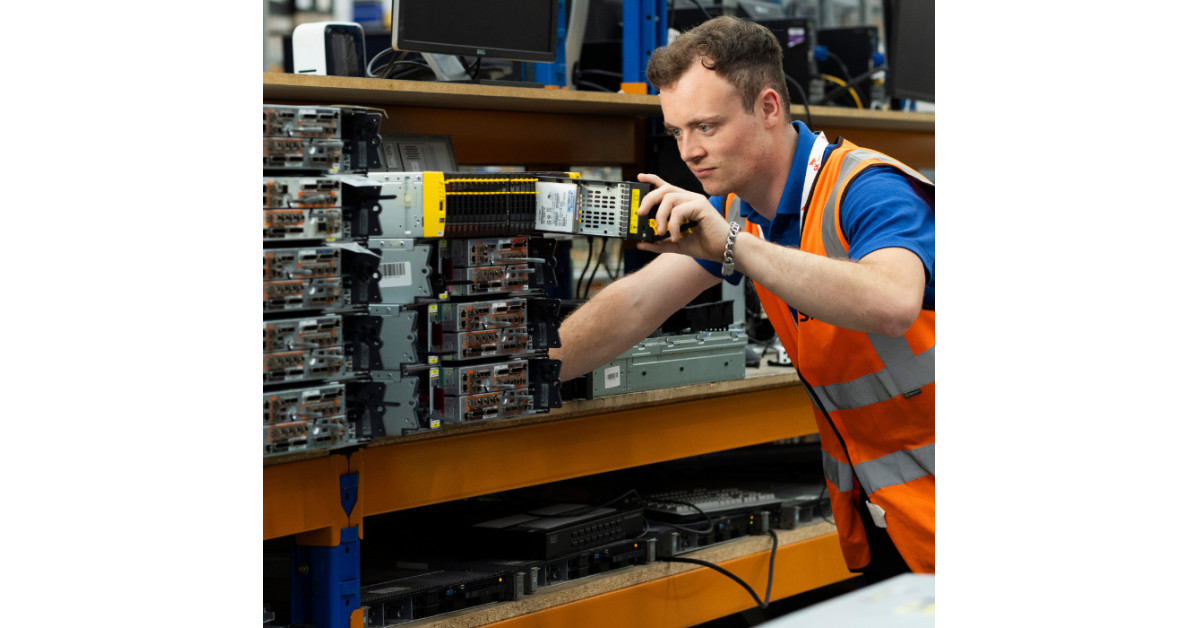
SK tes Launches New Circular IT Facility in Shannon, Expanding Ireland’s Role in Global Sustainable Tech Services
-

 Science & Technology5 months ago
Apple’s AI Innovations: Shaping the Competitive Landscape in 2026
-

 Business & Finance5 months ago
AI Revolutionizes Cryptocurrency Trading with Real-Time Analysis
-

 Business & Finance5 months ago
The Rise of Green Finance in Europe: Challenges and Limitations
-

 Entertainment & Arts5 months ago
The Cinematic Legacy of Michael Jackson: A Biopic Unveiled
-

 Business & Finance5 months ago
EU’s Regulatory Shift: A Boon for Small Tech Firms