
Science & Technology
Parkopedia and MINI bring joy to EV drivers: World’s first circular in-car OLED display showcases the best EV charging data around


[ad_1]
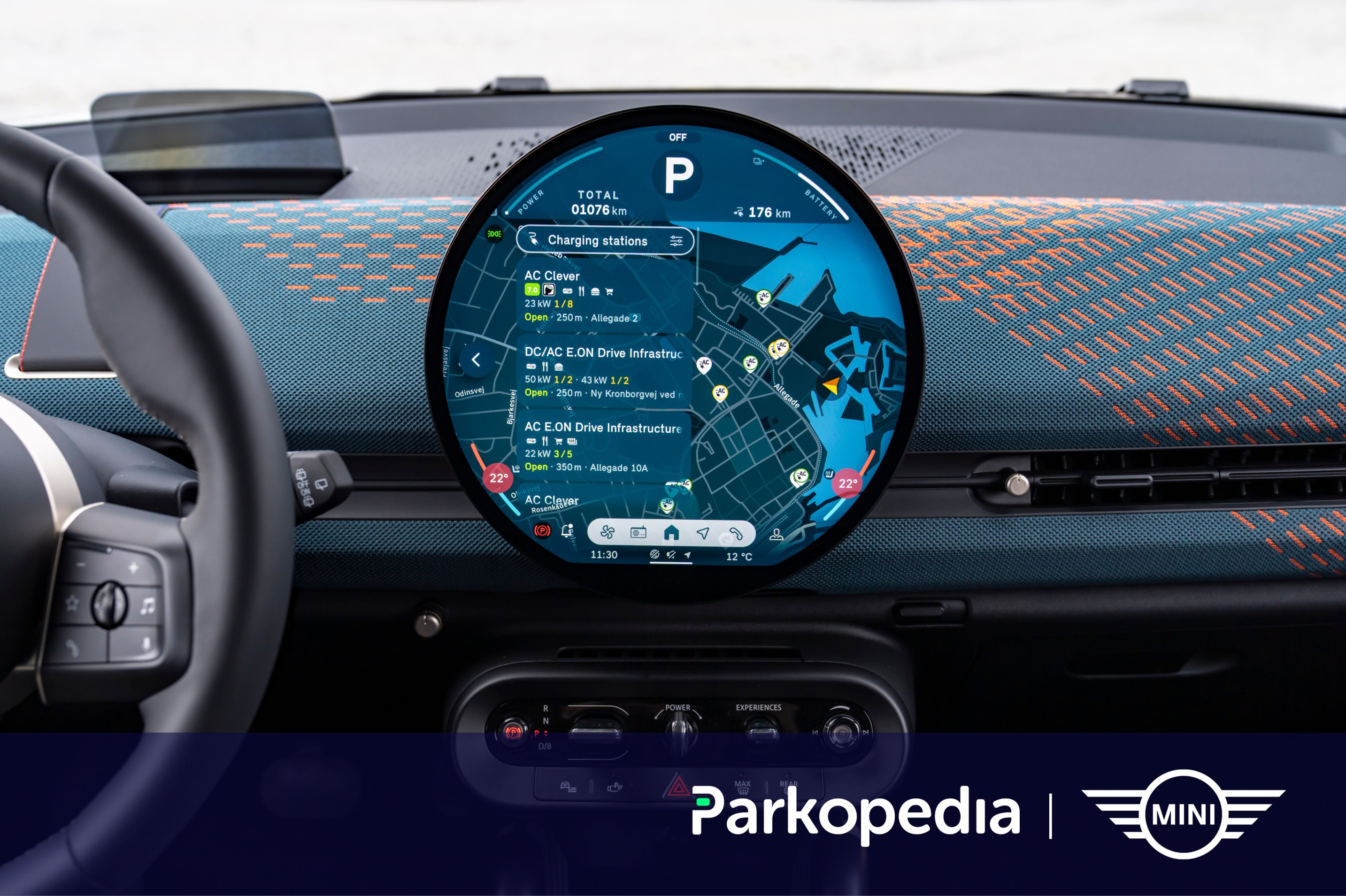
- Latest MINI media system best showcases the new streamlined EV charging experience
- Unique circular screen makes the typically challenging charging process enjoyable for MINI drivers thanks to integration with Parkopedia
- System makes it easy to find and verify desired charging sessions from within the vehicle
18 December 2024 – London, UK / Munich, Germany
MINI’s latest circular media system as part of their fresh new design language, provides an EV charging experience that delights drivers by seamlessly integrating Parkopedia’s award-winning EV charging data into the vehicle, making the charging process a more positive and enjoyable experience. This enables drivers across the USA, Europe and Asia1 to easily locate EV charging from the comfort of their cars, addressing one of the main pain points of owning an electric vehicle.
EV charging data plays a central role in the latest generation of electric MINIs, which feature the automotive world’s first circular in-car OLED screen. The new models feature a high-resolution 240mm screen, which offers strong clarity and next-level digital technology, while retaining the iconic MINI design of a circular central dial. The lower part of the screen is dedicated to important functions including navigation, which can be accessed at any time, improving usability.
OLED screen central to minimalist interior
As part of true driver convenience, the MINI OLED screen sits at the heart of the cabin, providing all core vehicle data, navigation, connected services, media and climate controls. The ‘ambience’ of the car can now be tailored to the driver’s personal preferences through distinct new MINI Experience Modes, which enable the driver to personalise the displays and driving experience
The central OLED display contributes to a clean and uncluttered interior layout that reduces distractions, enabling the driver to focus on the driving experience, with the car’s interior having a minimalist, digital, immersive and warm feel. Helping to make the system as usable as possible, MINI has made sure that all vehicle functions are operable through either touch or voice controls, with the display being moved nearer to the driver to ensure easy reach.
This innovative in-car technology is available across a broad range of global markets, including the USA, Europe and Asia. MINI Navigation features 3D visualisation and augmented reality displays as well as providing information on free parking spaces, with integrated in-car payment functionality, to further improve the driver experience.
Charging still a significant concern for many EV drivers
Charging is often seen as troublesome and tedious by EV drivers, with more than 90% of EV drivers being anxious about charging, according to the latest Parkopedia Global Driver Survey, with 44% having run out of charge before. The new circular OLED screen and seamless functionality aim to make charging a pleasing experience – a standout value-added feature for MINI drivers.
OLED screens are thinner and offer greater colour and contrast than LED equivalents, providing a more punchy image and greater clarity on the move. Integration of connected car services from Parkopedia offers added value to MINI drivers through parking and charging data and seamless in-car payments. This enables drivers of the latest generation of MINI models to search for parking and charging effortlessly from within the vehicle, navigate to these locations and pay for parking directly through the vehicle.
Drivers want in-car connected services functionality
This functionality successfully addresses the growing demand for more sophisticated in-car services, with 60% of drivers wanting in-car payments for services such as parking, charging, fuel and tolls, according to the latest Parkopedia Global Driver Survey. EV charging is highly valued by drivers, with 56% of global motorists wanting this feature, including 74% of current EV drivers.
More than half of drivers who would consider an EV consider finding charging away from home a concern and therefore having in-car features that simplify the process of both finding and paying for charging should help to encourage drivers to choose cars with these features. Brands that execute these features well also stand to benefit from increased customer loyalty compared with those that leave their drivers to find charging without assistance.
Julian Kisch, Corporate and Governmental Affairs Spokesperson MINI, said: “Not only does this service simplify the process of locating EV chargers, but it makes the whole charging experience more in tune with MINI’s brand values. The circular OLED media system provides a uniquely fun experience while being able to seamlessly access charging data directly from the vehicle takes the stress out of charging for MINI drivers.”
Highlighting the value of this service, Markus Dohl, VP of Sales Europe at Parkopedia, added: “MINI’s new circular media system provides a distinct, customisable driving experience and the addition of Parkopedia’s high-quality and extensive charging data charmingly displayed on their unique circular OLED screen, addresses one of the main concerns raised by EV drivers – finding and navigating to EV chargers to alleviate charging anxiety, potentially even with a smile. This is a big selling point for a distinctive brand such as MINI where a significant amount of the vehicle range is now electric.”
Notes to Editors
1EV charging service may differ depending on region and vehicle model
ENDS
About Parkopedia
Parkopedia is the leading connected car services provider used by automakers, organisations and millions of drivers around the world. Parkopedia helps drivers find and pay for parking, EV charging, fuel and tolls across 90 countries. Parkopedia is also developing highly detailed indoor maps and corresponding algorithms to help drivers and self-driving vehicles navigate to available parking spaces and EV chargers. Visit business.parkopedia.com for more information.
About MINI
With its four brands BMW, MINI, Rolls-Royce and BMW Motorrad, the BMW Group is the world’s leading premium manufacturer of automobiles and motorcycles and also provides premium financial and mobility services. The BMW Group production network comprises over 30 production sites worldwide; the company has a global sales network in more than 140 countries.
Parkopedia Global Media Contact
Adam Calland
Marketing Director
T: +44(0)7838219129
MINI Media Contact
Julian Kisch
Corporate and Governmental Affairs Spokesperson MINI
T: +49-151-601-38072
[ad_2]
Source link





Science & Technology
Quantum Computing Breakthrough: Data Security Implications
MIT’s new quantum algorithm could revolutionize data processing, posing significant challenges for current cryptographic systems. This article explores the implications for data security and potential solutions to counteract quantum threats.


The recent breakthrough in quantum computing by researchers at MIT marks a pivotal moment in the field of data security. On August 19, 2026, Nature published the details of a new quantum algorithm capable of processing data at speeds previously unimaginable. While this innovation holds enormous potential for advancing machine learning and other computational fields, it simultaneously presents a formidable challenge to the current cryptographic systems relied upon to safeguard sensitive information.
At the core of contemporary data security is the reliance on encryption techniques that depend on the complexity of certain mathematical problems, such as the factoring of large numbers, which are currently infeasible for classical computers to solve within a practical timeframe. However, quantum computers, with their ability to perform calculations exponentially faster than traditional machines, threaten to render these encryption methods obsolete. This development could have profound implications for sectors that prioritize data security, including finance, healthcare, and government, where sensitive data is at risk of exposure.
The immediate concern for cybersecurity experts is the potential for quantum computers to crack widely used encryption protocols, such as RSA and ECC, which form the backbone of secure internet communications. The computational power unleashed by quantum algorithms could theoretically decrypt encrypted data in a fraction of the time required by classical computers, leaving digital communications vulnerable to interception and exploitation.
In response to this looming threat, researchers and industry experts are actively exploring the development of quantum-resistant algorithms. These algorithms are designed to withstand the capabilities of quantum computing, ensuring the confidentiality and integrity of data even in a post-quantum world. Efforts in this direction include the study of lattice-based cryptography, hash-based signatures, and multivariate polynomial equations as potential foundations for secure encryption systems.
The urgency to develop and implement quantum-resistant cryptography is underscored by the rapid pace of advancements in quantum technology. Tech companies, governments, and academic institutions are investing heavily in research to safeguard their data infrastructures against quantum threats. The transition to quantum-resistant systems, however, is not without its challenges. It requires a comprehensive overhaul of existing cryptographic frameworks and widespread adoption across industries, a process that demands both time and resources.
Despite these challenges, the potential benefits of quantum computing in fields such as artificial intelligence, pharmaceuticals, and materials science cannot be overlooked. The same capabilities that pose a threat to data security also offer the promise of unprecedented advancements in computational power, enabling breakthroughs that were previously beyond reach.
As the world stands on the brink of a quantum revolution, the dual-edged nature of this technological leap is clear. While the security of our digital world faces new threats, the opportunity for innovation and progress is equally profound. The path forward will require a concerted effort to balance the risks and rewards of quantum computing, ensuring that the transformative potential of this technology is harnessed responsibly and securely.
In the coming years, as quantum technologies continue to evolve, the focus will be on developing robust standards for quantum-resistant cryptography and fostering collaboration between academia, industry, and government to navigate this new frontier. The race to secure our digital future in the face of quantum capabilities is not just a technical challenge but a strategic imperative that will shape the landscape of cybersecurity for decades to come.
Science & Technology
AI-Driven Tools Propel Mars Exploration to New Heights
NASA’s latest Mars mission features AI-driven tools in its rover, enabling autonomous navigation and faster data transmission, marking a significant advancement in space exploration technology.

NASA’s latest mission to Mars has captivated both scientific communities and the public, as the new rover equipped with AI-driven exploration tools begins its journey across the Martian landscape. Wired’s August 2026 report highlights the rover’s ability to autonomously navigate the challenging terrain while making real-time decisions, significantly enhancing the efficiency of data collection. This innovation is poised to revolutionize the way robotic missions are conducted in space.
The rover’s sophisticated communication systems represent another leap forward, allowing for faster and more reliable data transmission back to Earth. These advancements mean that scientists can receive critical information more swiftly, enabling them to adjust mission parameters as needed. According to Wired, this capability is essential for responding to unexpected findings and maximizing the scientific value of each mission.
Moreover, the integration of AI tools in the rover’s design marks a pivotal shift towards reducing dependence on Earth-based commands. As Wired notes, this development could pave the way for future missions that operate with greater autonomy, setting the stage for more complex and prolonged explorations of Mars. The implications of this technology extend beyond current missions, suggesting a future where human exploration of Mars is supported by highly capable robotic counterparts.
As NASA continues to push the boundaries of space exploration, the success of this mission will likely influence the design and execution of future endeavors. The potential for these AI-driven tools to transform space exploration is immense, promising a new era of discovery and innovation on the red planet and beyond.
Science & Technology
Quantum Computing Breakthroughs: Disrupting Industries with Oxford’s Innovations
A recent breakthrough in quantum computing at the University of Oxford promises to disrupt multiple industries by significantly enhancing computational capabilities. Explore the technological implications and potential disruptions poised to redefine sectors.

In May 2026, the University of Oxford announced a significant breakthrough in the field of quantum computing, unveiling an advanced error correction algorithm that has the potential to transform computational capabilities. This development is not just a scientific triumph; it heralds a new era of technological disruption across multiple industries. Quantum computing, long anticipated as the next frontier in technology, promises to solve complex problems beyond the reach of classical computers, and Oxford’s latest advancement brings this closer to reality.
At the core of this breakthrough is the enhancement in quantum error correction, a critical component that addresses the inherent instability of qubits, which are the fundamental units of quantum information. Traditional computers use bits of 0s and 1s, but quantum computers operate on qubits, which can exist in multiple states simultaneously. This superposition allows quantum computers to process information exponentially faster than classical computers. However, qubits are notoriously prone to errors due to environmental noise and operational inaccuracies. Oxford’s new algorithm significantly improves the error correction process, maintaining qubit stability longer and allowing extended computational tasks to be performed accurately.
The implications of this are profound. Industries ranging from pharmaceuticals to finance stand on the cusp of disruption as quantum computing offers the ability to model complex molecular structures, optimize large-scale financial portfolios, and even revolutionize artificial intelligence algorithms. In pharmaceuticals, for example, quantum computing can expedite drug discovery by accurately simulating molecular interactions, potentially reducing the time and cost associated with bringing new drugs to market. Similarly, in finance, quantum algorithms can optimize trading strategies and risk management with a precision unattainable by current technologies.
Moreover, the ripple effects of such a leap in computational power extend to data encryption and cybersecurity. Quantum computers possess the potential to decrypt classical encryption methods, prompting a race for quantum-resistant cryptography. This necessitates a paradigm shift in how we secure digital information, affecting every sector that relies on data security.
Despite the tremendous promise, the transition to quantum computing is not without its challenges. The infrastructure required to support quantum technologies is expensive and complex. There is also a significant skills gap; experts in quantum computing are scarce, and training a new generation of scientists and engineers is imperative. Furthermore, ethical considerations regarding the power of quantum computing must be addressed, particularly in terms of privacy and security.
Looking forward, as quantum computing continues to evolve, industries will need to adapt swiftly to harness its capabilities. Early adopters who invest in quantum technologies and develop quantum-ready strategies will likely dominate in the coming decade. As Oxford’s breakthrough demonstrates, the race is on to fully realize the potential of quantum computing and redefine the boundaries of what is technologically possible.
-

 Entertainment & Arts4 months ago
Drake’s ‘Iceman’: A Streaming Chart-Busting Success Story
-

 Science & Technology4 months ago
Apple’s AI Innovations: Shaping the Competitive Landscape in 2026
-
 Environment & Nature1 year ago
SK tes Launches New Circular IT Facility in Shannon, Expanding Ireland’s Role in Global Sustainable Tech Services
-
 Business & Finance1 year ago
Apple Appeals €500 Million EU Antitrust Fine: A High-Stakes Battle Over App Store Rules
-

 Business & Finance4 months ago
AI Revolutionizes Cryptocurrency Trading with Real-Time Analysis
-
 Science & Technology4 months ago
AI Fitness Instructors and Unreal Gains: Revolutionizing the Fitness Industry
-

 Entertainment & Arts4 months ago
The Cinematic Legacy of Michael Jackson: A Biopic Unveiled
-
 Entertainment & Arts1 year ago
OXYGEN FILMS ANNOUNCES NEW FILM ‘NOSEBLEED’ — A BOLD QUEER THRILLER THAT PEERS INTO THE DIGITAL ABYSS.