
Environment & Nature
GWCT welcomes acknowledgement of the growing threat of wildfire in the UK Climate Change Committee’s (CCC) new progress report


[ad_1]

The GWCT welcomes the UK Climate Change Committee’s 2023 report and its acknowledgement that the risk of wildfire will increase significantly in future decades. The report states: “The events of the last year [2022 saw the highest annual number of wildfires (greater than 30 hectares) ever recorded in the UK] reinforce the urgency of making better preparations for climate change now. Action cannot be delayed further.”
The report expresses concern that there is no national coordinated strategy to identify and mitigate risks of wildfire in England to people, habitats, food production, property and infrastructure. Furthermore, it recommends a number of actions to build resilience including the “management of vegetation and fuels (but minimising adverse biodiversity impacts)” and the “mapping of future UK wildfire risks”.
GWCT CEO Teresa Dent said,
“GWCT is very pleased to see the references to the need to protect vulnerable habitats from wildfire and to map future wildfire risk as these were key outcomes from a GWCT-hosted wildfire workshop in January 2023, chaired by Lord Deben, chairman of the UK CCC.
“At the workshop expert contributions were made from the UK and around the world combining inputs from scientists, practical land managers, firefighters, government officials, policymakers, meteorologists, and CCC staff. Many types of knowledge were shared: scientific; observational; experiential; practical and behavioural.
“Our thanks to all attendees in particular Lord Deben and the keynote speakers, Professor Morgan Varner of Tall Timbers in the US, Marc Castellnou of the Catalan Fire & Rescue Service, Professor Claire Belcher of the wildFIRE lab at Exeter University and Paul Hedley the National Fire Chiefs Council wildfire lead.”
The workshop reached a consensus on the need to increase understanding among policymakers and the wider public of the environmental, economic and social impacts of wildfire, together with the need for active management to mitigate these impacts and reduce the increasing risk of wildfire. Additionally, the workshop concluded the current policy is ineffective in its reliance on the fire and rescue services to put out/suppress wildfires and that further preventative intervention was required to manage fuel loads.
Teresa Dent continued:
“GWCT is pleased to see that the strong conclusions from the workshop including a national coordinated wildfire strategy, local wildfire response plans and the management of vegetation and fuels are now recommended actions in the CCC report.”
The GWCT’s team of upland ecologists has been working on sustainable upland management issues since 1979. In 2020 it published a Peatland Report which reviewed the environmental impacts including carbon sequestration, greenhouse gas emissions and wildfire on peatland in England associated with grouse moor management. This report initiated conversations with the CCC. In 2022, GWCT published a second report Sustaining Ecosystems looking at the ecosystem delivery of English grouse moors compared to other upland land uses. It showed that grouse moor management performed well compared to those other land uses in terms of wildfire risk mitigation and carbon storage and emissions.
Available for Interview: Teresa Dent, Chief Executive GWCT
To arrange, please contact Joe Dimbleby [email protected], tel 07708 200856
Ends
The Game & Wildlife Conservation Trust gwct.org.uk – providing research-led conservation for a thriving countryside. The GWCT is an independent wildlife conservation charity which has carried out scientific research into Britain’s game and wildlife since the 1930s. We advise farmers and landowners on improving wildlife habitats. We employ 22 post-doctoral scientists and 50 other research staff with expertise in areas such as birds, insects, mammals, farming, fish and statistics. We undertake our own research as well as projects funded by contract and grant-aid from Government and private bodies.
[ad_2]
Source link



Environment & Nature
Scotland’s Rewilding Revolution: Ecological Benefits and Global Influence
Scotland’s rewilding initiatives are transforming landscapes and ecosystems, offering ecological benefits and inspiring global conservation efforts. Explore the impact and future prospects of this bold environmental strategy.


In the misty highlands of Scotland, a quiet revolution is taking place. Rewilding, a concept that aims to restore ecosystems to their natural state, has been gaining momentum, transforming vast areas into thriving habitats. This ambitious movement is not only reshaping the Scottish landscape but also providing significant ecological benefits that echo far beyond its borders.
Central to the rewilding efforts are projects like the Cairngorms Connect and Trees for Life, which focus on restoring native forests and reintroducing keystone species such as the Eurasian lynx and beavers. These initiatives aim to enhance biodiversity, improve ecosystem services, and combat climate change by sequestering carbon in regenerating woodlands.
The ecological benefits are manifold. By reintroducing native species, these projects help restore natural processes and food webs, leading to healthier and more resilient ecosystems. The return of beavers, for instance, has been transformative; their dam-building activities create wetlands that support a myriad of plant and animal species, increase water retention, and reduce flood risks.
Moreover, rewilding contributes to soil restoration and enhances carbon capture. As diverse plant communities establish themselves, they improve soil structure and fertility, which in turn supports a broader range of wildlife. This natural regeneration process not only bolsters biodiversity but also plays a critical role in mitigating climate change.
However, the journey is not without its challenges. Critics argue that rewilding can conflict with traditional land uses, such as farming and grouse shooting, which are economically important to local communities. Balancing these interests requires careful negotiation and collaboration between stakeholders to ensure that rewilding projects are both ecologically and socially sustainable.
Looking ahead, Scotland’s rewilding initiatives hold immense potential to inspire similar efforts globally. By demonstrating the ecological and economic viability of rewilding, Scotland could galvanize international conservation strategies and contribute to global biodiversity targets.
As these wild landscapes continue to evolve, they offer a glimpse into a future where humans and nature coexist in harmony, each thriving in a supportively interconnected world. Scotland’s rewilding efforts may well be the blueprint for ecological restoration worldwide, as nations grapple with the twin crises of biodiversity loss and climate change.
Environment & Nature
The Promise and Peril of Climate Tech Innovations
As the climate crisis deepens, innovative technologies promise solutions, yet face significant challenges. This article critically examines the latest breakthroughs in climate tech, from carbon capture to renewable energy, and the obstacles they encounter.

In a bustling Silicon Valley lab, engineers are racing against time to perfect a new carbon capture technology, one that promises to revolutionize the fight against climate change. As the world grapples with the escalating impacts of global warming, the demand for innovative solutions has never been more urgent. Yet, as promising as these technologies appear, they are not without their challenges.
Carbon capture technology, designed to trap and store carbon dioxide emissions from power plants and industrial sources, is hailed as a critical component in the global strategy to reduce greenhouse gas emissions. However, the technology faces significant hurdles. High costs, energy requirements, and the need for extensive infrastructure development pose formidable barriers to widespread implementation. Critics argue that reliance on carbon capture could detract from efforts to reduce emissions at their source, such as transitioning to renewable energy.
Renewable energy technologies, such as solar and wind power, have seen remarkable advancements in recent years. The cost of solar panels has plummeted, making them more accessible than ever before. Wind turbines are now more efficient, capable of generating power even in low-wind conditions. Despite these advancements, the transition to a fully renewable energy grid faces obstacles. Storage technology, essential for balancing supply and demand, is still developing. Furthermore, the intermittent nature of wind and solar energy raises concerns about reliability, requiring substantial investment in grid infrastructure.
The climate tech sector is also grappling with issues of scalability and investment. For many startups, securing the capital needed to bring their innovations to market is a daunting challenge. Investors are often wary of the long timelines and uncertain returns associated with climate tech projects. This caution is compounded by regulatory hurdles and the need for supportive policy frameworks to incentivize adoption.
Despite these challenges, there is cautious optimism about the potential impact of climate tech innovations. Governments and private sector players are increasingly recognizing the necessity of these technologies in achieving climate targets. International collaborations and public-private partnerships are emerging as vital mechanisms for driving progress.
As the world stands at a crossroads, the stakes could not be higher. The successful deployment of climate tech innovations could significantly reduce carbon emissions, help stabilize global temperatures, and pave the way for a sustainable future. However, realizing this potential will require overcoming significant obstacles, fostering collaboration, and maintaining an unwavering commitment to innovation.
In conclusion, while climate tech holds immense promise, it is not a panacea. The path forward will demand bold action, strategic investments, and a willingness to tackle the inherent challenges head-on. Only then can we hope to harness the full potential of these innovations and secure a future where technology and nature coexist harmoniously.
Environment & Nature
Plant Vogtle and the Future of Nuclear Energy: Navigating the Debate
An in-depth exploration of Plant Vogtle’s role in the nuclear energy debate, examining its environmental and economic impacts two years post-completion.
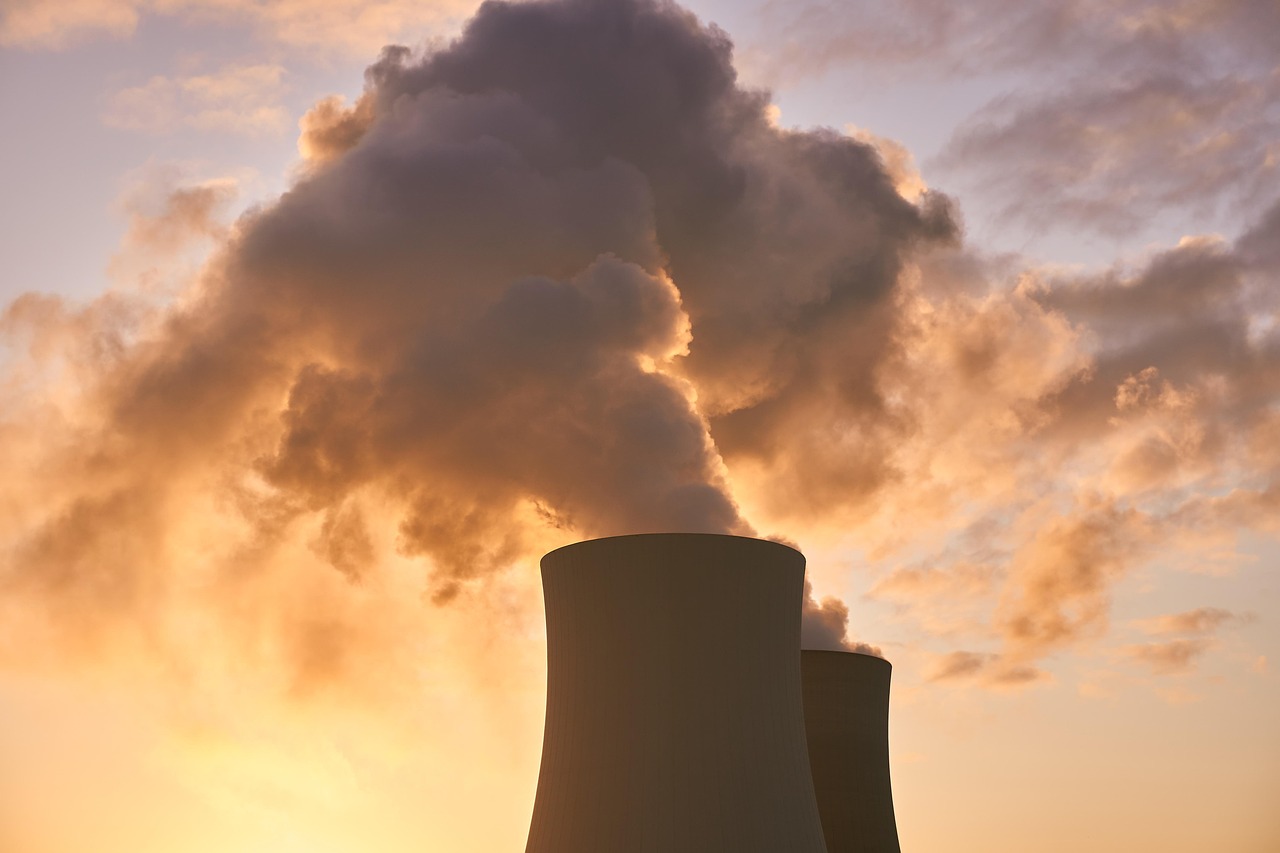
The completion of Plant Vogtle, the largest nuclear power plant construction project in the United States in over three decades, has reignited discussions about the role of nuclear energy in America’s future. As the nation grapples with the dual challenges of meeting growing energy demands and reducing carbon emissions, the implications of Plant Vogtle are far-reaching.
Plant Vogtle, located in Georgia, consists of two new reactors, Vogtle Units 3 and 4, which were added to the existing two units. The project, which faced years of delays and budget overruns, finally achieved a significant milestone with the completion of Unit 3. This achievement has been hailed by proponents of nuclear energy as a testament to the viability of nuclear power as a stable, low-emission energy source.
However, the journey to completion was not without controversy. Critics argue that the financial and logistical challenges faced by Plant Vogtle underscore the risks and unpredictability associated with nuclear power projects. The debate is further complicated by concerns over safety, waste management, and the environmental impacts of nuclear power.
Supporters of nuclear energy highlight its potential to provide a reliable supply of clean energy. Unlike solar and wind, which are intermittent, nuclear power offers a consistent energy output, which is crucial for maintaining grid stability. Proponents also point to the need for a diverse energy portfolio to meet the country’s energy needs while reducing reliance on fossil fuels.
From an economic perspective, the completion of Plant Vogtle has significant implications for the region. It is expected to create thousands of jobs and contribute to local economic growth. Moreover, the plant’s operation will play a critical role in Georgia’s energy strategy, potentially leading to lower electricity costs for consumers.
Looking ahead, the future of nuclear energy in the United States remains uncertain. While Plant Vogtle’s completion is a milestone for the industry, the high costs and extended timelines associated with nuclear projects continue to pose challenges. As the country moves towards renewable energy sources, the role of nuclear power will likely depend on technological advancements, policy decisions, and public perception.
In conclusion, Plant Vogtle stands at the intersection of the nuclear energy debate, serving as a focal point for discussions about the viability and sustainability of nuclear power in the 21st century. As the world seeks solutions to the climate crisis, the lessons learned from Plant Vogtle will be instrumental in shaping the future of energy policy.
-
 Business & Finance2 years ago
Xella achieves significant progress in CO₂ emissions reduction, circular economy, and occupational safety
-

 Entertainment & Arts5 months ago
Drake’s ‘Iceman’: A Streaming Chart-Busting Success Story
-
 Environment & Nature1 year ago
SK tes Launches New Circular IT Facility in Shannon, Expanding Ireland’s Role in Global Sustainable Tech Services
-

 Science & Technology5 months ago
Apple’s AI Innovations: Shaping the Competitive Landscape in 2026
-

 Business & Finance5 months ago
AI Revolutionizes Cryptocurrency Trading with Real-Time Analysis
-

 Business & Finance5 months ago
The Rise of Green Finance in Europe: Challenges and Limitations
-

 Entertainment & Arts5 months ago
The Cinematic Legacy of Michael Jackson: A Biopic Unveiled
-

 Environment & Nature5 months ago
Scotland’s Rewilding Revolution: Ecological Benefits and Global Influence