
Business & Finance
HEIDELBERG anticipates a very strong second half to financial year 2024/2025


[ad_1]
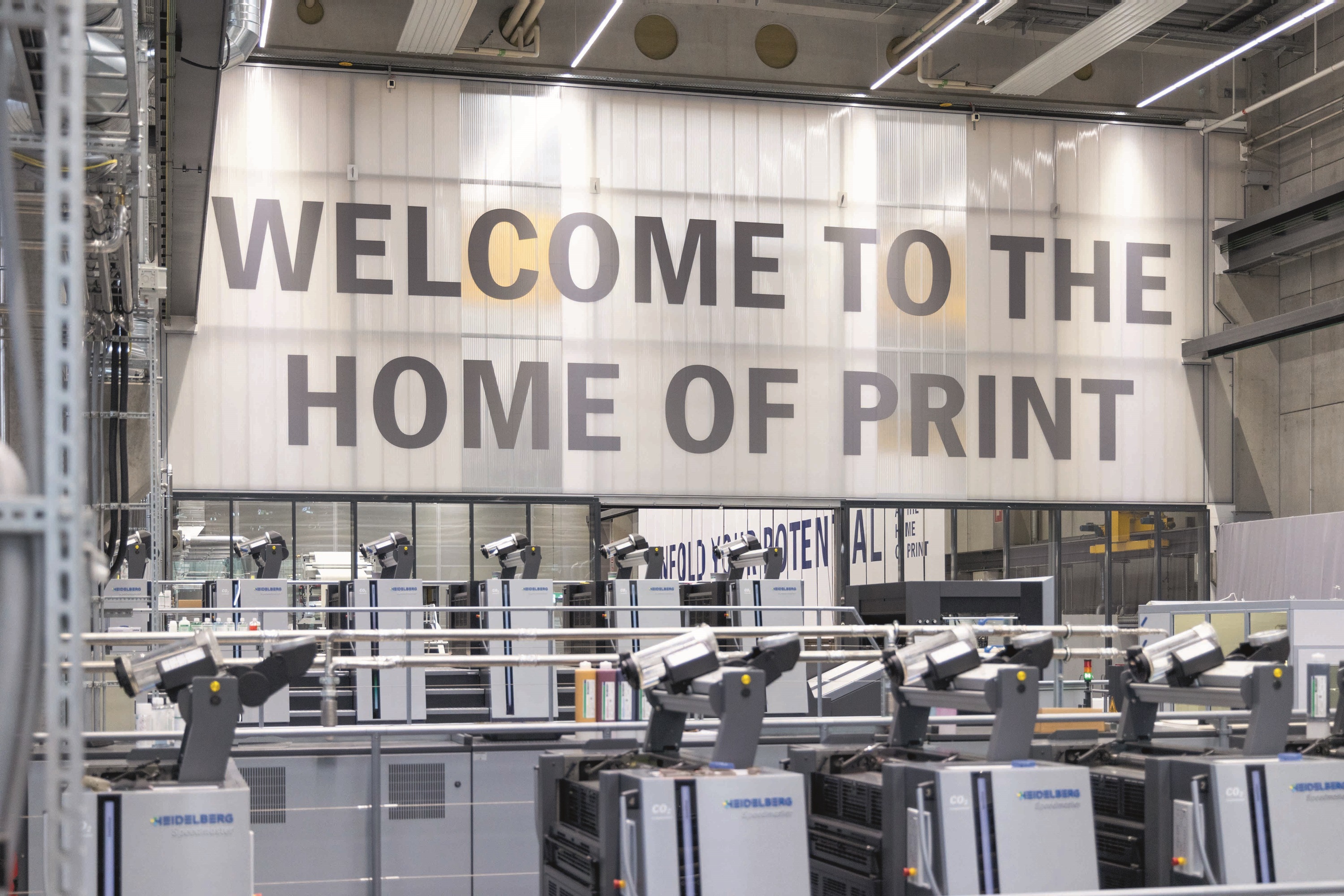
|
Thanks to a high order backlog of € 953 million, Heidelberger Druckmaschinen AG (HEIDELBERG) anticipates that the second half of financial year 2024/2025 will be strong, while current developments over the quarters reflect the pronounced seasonality that is to be expected. This positive outlook is based on strong incoming orders in the first half of the year, which are 7.4 percent up on the previous year, at € 1.273 billion. Sales of € 915 million were within expectations, due to purchasing restraint ahead of the drupa trade show (previous year: € 1,092 million).
“HEIDELBERG is starting a very strong second half of the year. We are now ramping up the utilization of our production capacities so we can work through our order backlog in the third and fourth quarters quickly and profitably,” says HEIDELBERG CEO Jürgen Otto. “The forecast sales volume for new machines has already been almost entirely met with orders and our production operations are running at full capacity. We can be confident that we will achieve our targets for the year.”
HEIDELBERG is still particularly strong in and around China. Incoming orders in the Asia Pacific region recorded the clearest growth in the first six months of the current financial year, increasing by approximately 10 percent.
Based on strong order levels, the company anticipates a clear increase in sales in the second half of the current financial year in particular. When adjusted for special items, the
EBITDA margin in the first six months of financial year 2024/2025 was 3.4 percent (same period of previous year: 9.2 percent) and was impacted in particular by lower sales in Q1 and by expenses related to drupa. Strict cost discipline had a positive impact in the reporting period. This is another reason why EBITDA improved significantly compared to the first quarter from € -9 million to € 40 million. During the period under review, there were no special items that require adjustment. Compared to the same period of the previous year (€ 33 million), the result after taxes after six months dropped in line with the lower adjusted EBITDA to € -35 million. In the second quarter, the result after taxes was positive, at € 7 million (same quarter of previous year: € 23 million).
After the first half-year, free cash flow
was, as anticipated, € -102 million (same period of previous year: € -28 million). It improved significantly in the second quarter, creeping into positive figures, at € 2 million. “Our active cost management is increasingly bearing fruit by considerably improving free cashflow over the course of the year,” reports
HEIDELBERG CFO Tania von der Goltz. “Consistent cost control over the coming months will play a big part in the success of the current financial year. Furthermore, the anticipated improvements in results in the second half of the year will have a positive impact on the free cash flow.”
Packaging solutions segment remains growth driver –
annual forecast confirmed
Compared to the same period of the previous year, the packaging solutions segment was able to increase incoming orders in the first half of the year by around 9.7 percent to € 675 million, thereby contributing approximately 53 percent to the total volume. Megatrends in the packaging market are first and foremost the growing demand for packaging that is both sustainable and high-quality. This is where the positioning of HEIDELBERG as a systems integrator and total solution provider has a positive impact, helping to further expand its very strong position in the packaging market. The company also anticipates further growth opportunities in China due to its location benefits. In the print solutions segment, incoming orders rose in the same period by around 5.5 percent to € 594 million.
Beyond the packaging business, HEIDELBERG wants to capitalize on other strengths. The company is characterized by a high export ratio, as over 80 percent of its business is generated outside of Germany. In particular, the company sees further growth opportunities in China and the Asia-Pacific region thanks to local production and a very strong market position. Beyond Asia, HEIDELBERG benefits globally in the service business from a large installed base of machines that are connected to HEIDELBERG via a cloud. Networking allows the efficiency of the systems to be improved, preventive maintenance to be planned and software updates to be installed.
Taking into account the expectations and assumptions published and presented in the 2023/2024 management report, the Company continues to expect sales for financial year 2024/2025 to be in line with the previous year’s figure (previous year: € 2,395 million). The adjusted EBITDA margin is also expected to be similar to the previous year’s figure (previous year: 7.2 percent). The high order backlog resulting from the successful drupa trade fair and the continuous focus on margins and costs will provide a sound basis for the achievement of the targets. In future, the focus will primarily be on strategic growth measures in the Packaging, Industry and Service segments, as well as further cost reductions.
Image material and further information about the company are available in the Investor Relations portal and Press Lounge of Heidelberger Druckmaschinen AG at www.heidelberg.com.
Further information:
Corporate Communications
Florian Pitzinger
Phone: +49 151 67968774
E-mail: [email protected]
Thomas Fichtl
Phone: +49 6222 82-67123
E-mail: [email protected]
Investor Relations
Maximilian Beyer
Phone: +49 6222 82-67120
E-mail: [email protected]
Important note:
This press release contains forward-looking statements based on assumptions and estimates made by the management of Heidelberger Druckmaschinen Aktiengesellschaft. Even if the company management is of the opinion that these assumptions and estimates are accurate, actual future developments and future actual results may deviate considerably from these assumptions and estimates due to a variety of factors. These factors may include, for example, changes in the overall economic situation, exchange rates and interest rates as well as changes within the graphic arts industry. Heidelberger Druckmaschinen Aktiengesellschaft provides no guarantee and assumes no liability that future developments and the actual results achieved in the future will correspond to the assumptions and estimates made in this press release.
[ad_2]
Source link






Business & Finance
How AI is Transforming Small Businesses: Success Stories
This article explores the transformative impact of AI on small enterprises, highlighting specific case studies of businesses that have successfully integrated AI technologies to enhance efficiency and competitiveness.

In September 2026, the Financial Times reported a significant surge in the adoption of AI technologies by small enterprises, driven by the promise of enhanced efficiency and reduced operational costs. Among the many businesses venturing into this digital frontier, a few stand out as exemplary cases, demonstrating the transformative power of AI when strategically implemented.
Take, for instance, GreenLeaf Grocers, a small organic food retailer based in Brighton. Faced with the challenges of scaling operations and managing inventory efficiently, GreenLeaf turned to AI-driven inventory management systems. By analyzing customer purchasing patterns and forecasting demand, the system enabled the grocer to optimize stock levels, reducing waste by 30% within the first year. The owner, Sarah Jenkins, noted, “AI has not only streamlined our operations but has also allowed us to focus more on customer service and community engagement.” This case underscores the potential of AI to reshape retail operations, offering insights into customer behavior that were previously inaccessible.
Another compelling story is that of TechFixers, a family-run electronics repair shop in Manchester. Confronted with increasing competition and the need to differentiate their services, the owners implemented an AI-powered diagnostic tool. This technology rapidly identifies device issues, providing technicians with precise solutions. As a result, TechFixers reduced average repair times by 40%, significantly boosting customer satisfaction and expanding their clientele. The owner, Mark Thompson, attributes their competitive edge to AI, stating, “Integrating AI into our diagnostic process has been a game-changer, allowing us to offer quicker, more reliable repairs.”
In the realm of financial services, FinServe, a small accounting firm in London, illustrates the impact of AI on service delivery. By employing AI-based analytics tools, FinServe offers clients real-time financial insights and predictive forecasting. This capability has attracted a new segment of tech-savvy clients seeking proactive financial management. The firm’s director, Lucy Patel, emphasized the strategic advantage gained, “AI has empowered us to provide a level of service that was previously the domain of larger firms. We’re now able to deliver insights and strategic advice that truly add value for our clients.”
These cases highlight not only the successful application of AI in various industries but also the diverse ways in which small enterprises can leverage technology to overcome specific challenges. While the potential benefits of AI are substantial, the journey is not without its hurdles. Businesses must navigate the complexities of data integration, system compatibility, and the initial investment costs. However, for those willing to embrace the change, the rewards can be substantial.
As AI technology continues to evolve, its role in small business operations is likely to expand, offering new opportunities for innovation and growth. The experiences of GreenLeaf Grocers, TechFixers, and FinServe serve as a testament to the transformative power of AI, providing a roadmap for other small enterprises eager to harness this technology.
Looking ahead, the integration of AI into small business operations is set to become even more pervasive. As technology advances and becomes more accessible, businesses of all sizes will find new ways to leverage AI for competitive advantage, creating a dynamic and constantly evolving landscape.
Business & Finance
EU Cryptocurrency Regulations: A New Era for Market Transparency and Investor Confidence
The European Union’s new cryptocurrency regulations promise to enhance market transparency and bolster investor confidence, potentially setting a global standard for regulatory practices.
In September 2026, the European Union unveiled a comprehensive regulatory framework for cryptocurrencies, marking a pivotal moment in the evolution of digital finance. These new regulations are designed to foster market transparency and enhance investor confidence, setting a precedent that could influence global cryptocurrency policies. The framework, announced by the European Commission, aims to address the volatility and unpredictability that have long plagued the cryptocurrency markets. By implementing stringent disclosure requirements and robust consumer protection measures, the EU seeks to create a safer and more stable environment for both seasoned investors and new entrants.
At the heart of the new regulations are provisions that require cryptocurrency exchanges and wallet providers to adhere to strict transparency standards. This includes mandatory reporting of transaction data and enhanced identity verification processes, which aim to curb illegal activities such as money laundering and fraud. According to the European Commissioner for Financial Services, Mairead McGuinness, these measures will not only protect investors but also bolster the legitimacy of the cryptocurrency market as a whole.
The impact on the market has been immediate and largely positive. Following the announcement, several major cryptocurrencies experienced a surge in value, reflecting increased confidence in the regulated environment. Industry leaders, including Binance CEO Changpeng Zhao, have publicly supported the EU’s approach, highlighting its potential to attract institutional investors who have been hesitant to engage with unregulated markets.
Moreover, the EU’s proactive stance on regulation is likely to influence other regions to adopt similar frameworks. As the global financial community grapples with the challenges and opportunities presented by digital currencies, the EU’s model offers a blueprint for balancing innovation with security. Experts suggest that this could lead to a harmonized set of international standards, facilitating cross-border cryptocurrency transactions and fostering global economic integration.
Critics, however, caution against over-regulation stifling innovation within the cryptocurrency space. Yet, proponents argue that a well-regulated market can actually spur technological advancement by providing clear guidelines within which innovation can thrive. By demystifying the legal landscape, the EU’s regulations could encourage more startups to develop blockchain-based solutions under a stable and predictable legal framework.
Looking ahead, the EU’s regulatory framework is poised to redefine the cryptocurrency landscape, with potential ripple effects across the globe. As other jurisdictions observe the EU’s progress, they may be inspired to implement similar measures, ultimately contributing to a more transparent and secure global financial system. In this new era, the balance between regulation and innovation will be key to unlocking the full potential of cryptocurrencies.
Business & Finance
EU’s Regulatory Shift: A Boon for Small Tech Firms
New EU regulations targeting tech monopolies promise to level the playing field, offering unprecedented opportunities for smaller tech companies to thrive. Explore how these changes could reshape the industry.

In a decisive move aimed at curbing the dominance of technology giants, the European Union has implemented a suite of new regulations designed to foster competition and innovation within the industry. Announced by the European Commission on May 21, 2026, these measures are part of a broader strategy to dismantle monopolistic practices and empower smaller players in the tech sector. The Financial Times reported that this regulatory shift could herald a new era for startups and small businesses, offering them a unique opportunity to compete on a more level playing field.
For years, the EU has tussled with tech behemoths over issues ranging from data privacy to market monopolies. These latest regulations, however, mark a significant escalation in the EU’s efforts to promote fair competition. By targeting the monopolistic practices that have long stifled smaller competitors, the EU aims to dismantle barriers that have historically protected the interests of large corporations. This shift is timely, as innovation increasingly emerges from smaller tech companies that often lack the resources to challenge established giants.
The current regulatory framework introduces stringent measures that impose limits on data sharing, promote transparency in algorithms, and mandate interoperability between platforms. These measures, as detailed by the European Commission, aim to dismantle the walls that have allowed tech giants to corner markets and stifle competition. Smaller firms, often more agile and innovative, stand to benefit immensely. By ensuring that platforms cannot unfairly prioritize their own services, these regulations open doors for startups to enter markets previously dominated by a few large players.
Market analysts have noted that these changes could lead to a renaissance in tech innovation across Europe. Smaller companies, unburdened by the constraints of battling entrenched incumbents, are likely to experiment with new technologies and business models. For instance, the requirement for interoperability could lead to the development of new collaborative platforms that challenge existing ecosystems. As a result, consumers may see a surge in diverse product offerings tailored to specific needs, driven by smaller companies eager to carve out niche markets.
The response from tech giants has been predictably cautious. While some have expressed willingness to comply, others have raised concerns about the potential for stifling innovation and increasing operational costs. However, proponents of the regulations argue that true innovation thrives in competitive environments. By breaking the hold of tech monopolies, the EU is not only fostering a fairer market but also driving the industry towards a more dynamic and responsive future.
Looking ahead, these regulatory changes could catalyze a shift in the global tech landscape. As smaller companies gain traction and challenge the status quo, the ripple effects may extend beyond Europe, influencing regulatory approaches worldwide. This development promises to reshape the dynamics of the tech industry, offering a glimpse of a future where innovation is driven by diversity and competition, rather than the dominance of a select few.
-
 Business & Finance2 years ago
Xella achieves significant progress in CO₂ emissions reduction, circular economy, and occupational safety
-

 Entertainment & Arts5 months ago
Drake’s ‘Iceman’: A Streaming Chart-Busting Success Story
-
 Environment & Nature1 year ago
SK tes Launches New Circular IT Facility in Shannon, Expanding Ireland’s Role in Global Sustainable Tech Services
-

 Science & Technology5 months ago
Apple’s AI Innovations: Shaping the Competitive Landscape in 2026
-

 Business & Finance5 months ago
AI Revolutionizes Cryptocurrency Trading with Real-Time Analysis
-

 Business & Finance5 months ago
The Rise of Green Finance in Europe: Challenges and Limitations
-

 Entertainment & Arts5 months ago
The Cinematic Legacy of Michael Jackson: A Biopic Unveiled
-

 Business & Finance5 months ago
EU’s Regulatory Shift: A Boon for Small Tech Firms