Connect with us

Environment & Nature

SensoRy AI, Founded by Teen Inventor, Receives Funding and Partners With Irvine Ranch Conservancy and Orange County Fire Authority to Test Climate Solution

Published

on

[ad_1]

Ryan Honary to work with organizations to further evaluate his “AI-Driven Wireless Mesh Sensor Network for Early Detection and Growth Prediction of Environmental Hazards”

Press Release


Dec 14, 2022

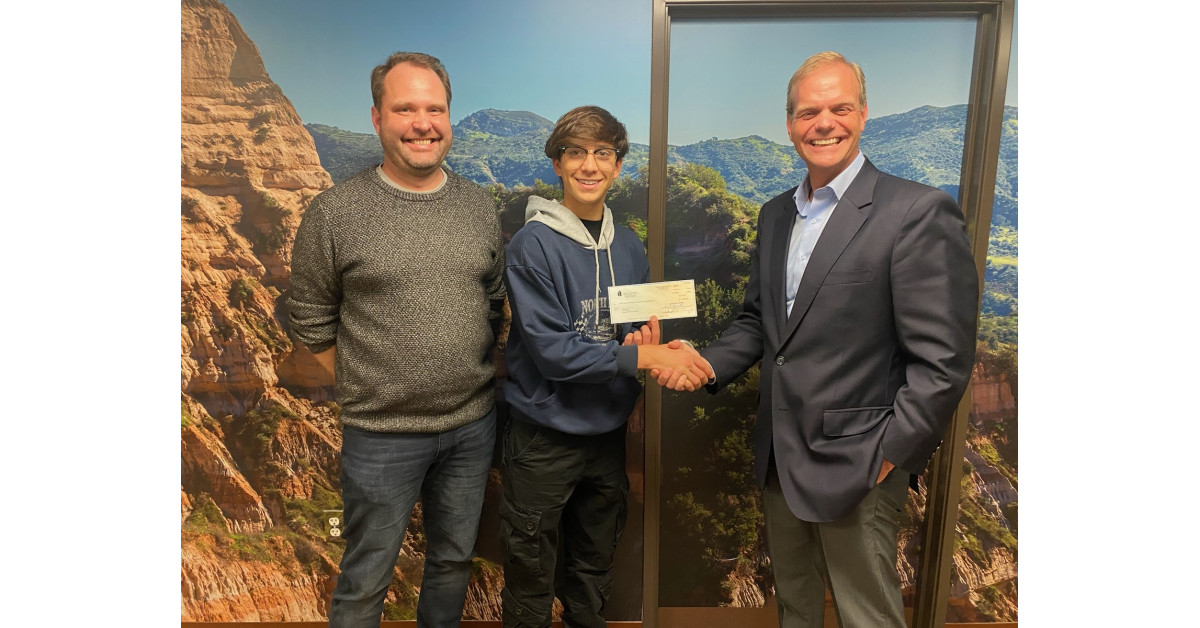
At a time when many teens are planning for the near future, 15-year-old Ryan Honary is looking further ahead. He is passionate about saving the planet, and thanks to a new partnership between his company, Sensory AI, the nonprofit Irvine Ranch Conservancy (IRC) and, most recently, the Orange County Fire Authority (OCFA), he’s closer to creating a better future for humankind.

“I am grateful and excited for the opportunity to work alongside Dr. Nathan Gregory and Chief Brian Fennessy,” said Honary. “This new partnership with IRC and OCFA advances the SensoRy AI solution with the goal of protecting lives and the environment throughout California and around the globe.”

The Newport Beach teen invented an AI-driven early wildfire detection system. Utilizing a wireless mesh network of sensors and AI capable of predicting spread patterns, Honary’s low-cost network can be deployed anywhere and communicate in real-time via an app. A research grant from the U.S. Navy enabled SensoRy AI to build a team and further develop and test the technology in rugged environments. Honary was recently invited by OCFA Chief Brian Fennessy to present the SensoRy AI solution at UC San Diego’s WiFire Lab and received favorable feedback. 

Honary began working with Nathan Gregory, Ph.D., Chief Conservation Officer of IRC, in 2021 to develop field applications for his concept. IRC manages 30,000 acres of fire-prone urban wildlands in Orange County. The system was field tested at IRC’s Native Seed Farm earlier this year with successful results.

“Ryan’s solution will enable us to monitor key factors that contribute to preservation and stewardship of our local wildlands. We believe this technology has applications that can potentially change conservation and land management everywhere,” said Dr. Gregory.

IRC sees such broad potential in this technology that it recently invested $250,000 of its own funds that will allow the network to be tested more broadly. In addition, Dr. Gregory will be joining the SensoRy AI Technical Advisory Board.

In November, OCFA Chief Fennessy also joined SensoRy AI as an advisor, and his team of fire-fighting professionals are assisting Ryan in further developing his platform.

“This technology has enormous potential to keep our first responders and our communities safe by helping predict, detect, and suppress wildfires,” said Fennessy.

Honary was recently selected to present his story and vision at the upcoming UNESCO Learning Planet Festival on Jan. 23-28, 2023, in Paris, France. His presentation is titled “The Future of Artificial Intelligence-Driven Environmental Solutions.” The Learning Planet Festival brings together hundreds of pioneering organizations and activists learning to take care of oneself, others and the planet.

About Ryan Honary

Ryan Honary is an award-winning 15-year-old student at Stanford Online High School, who has been putting his STEM-fueled passion for people and the environment into real action for years. While not developing science-based solutions to local and global climate challenges, Honary loves playing competitive tennis and, in support of a local not-for-profit, teaching it to autistic youth; singing and shredding on guitar; and surfing in his hometown of Newport Beach, CA. Follow him on Instagram, Twitter or Facebook.

Honary’s solution was originally developed in response to the devastation of the 2018 Camp Fire, including the deaths of 85 people and the destruction of over 18,000 structures at a cost of more than $16.5 billion. The invention earned him Grand Prize at the 2019 Ignite Innovation Student Challenge and established the Early Wildfire Detection Network, for which he was named the 2020 American Red Cross Disaster Services Hero for Orange County. He also earned a spot in the Top 30 Finalists at the 2020 Broadcom Masters.

About Sensory AI

In March 2020, Ryan Honary’s early wildfire detection system won the prestigious Office of Naval Research (ONR) Naval Science grant. This grant led to the formation of Sensory AI. The company has since received multiple rounds of funding from ONR for continued research and development.

About Irvine Ranch Conservancy

Irvine Ranch Conservancy is a nonprofit organization whose mission is to restore, protect, and enhance the ecological health of urban wildlands in a way that fosters compatible human behaviors and inspires connections and partnerships. The Conservancy manages and restores approximately 30,000 acres of rare wildlands in Orange County, California, in partnership with public landowners.

About Orange County Fire Authority

Orange County Fire Authority is a regional fire service agency that serves 23 cities and all unincorporated areas in Orange County. OCFA protects over 2 million residents from its 77 fire stations located throughout Orange County. OCFA, founded in 1995, is a premier public safety agency providing superior fire protection and medical emergency services to our communities.

Source: SensoryAI

[ad_2]

Source link

Environment & Nature

Scotland’s Rewilding Revolution: Ecological Benefits and Global Influence

Scotland’s rewilding initiatives are transforming landscapes and ecosystems, offering ecological benefits and inspiring global conservation efforts. Explore the impact and future prospects of this bold environmental strategy.

Published

on

In the misty highlands of Scotland, a quiet revolution is taking place. Rewilding, a concept that aims to restore ecosystems to their natural state, has been gaining momentum, transforming vast areas into thriving habitats. This ambitious movement is not only reshaping the Scottish landscape but also providing significant ecological benefits that echo far beyond its borders.

Central to the rewilding efforts are projects like the Cairngorms Connect and Trees for Life, which focus on restoring native forests and reintroducing keystone species such as the Eurasian lynx and beavers. These initiatives aim to enhance biodiversity, improve ecosystem services, and combat climate change by sequestering carbon in regenerating woodlands.

The ecological benefits are manifold. By reintroducing native species, these projects help restore natural processes and food webs, leading to healthier and more resilient ecosystems. The return of beavers, for instance, has been transformative; their dam-building activities create wetlands that support a myriad of plant and animal species, increase water retention, and reduce flood risks.

Moreover, rewilding contributes to soil restoration and enhances carbon capture. As diverse plant communities establish themselves, they improve soil structure and fertility, which in turn supports a broader range of wildlife. This natural regeneration process not only bolsters biodiversity but also plays a critical role in mitigating climate change.

However, the journey is not without its challenges. Critics argue that rewilding can conflict with traditional land uses, such as farming and grouse shooting, which are economically important to local communities. Balancing these interests requires careful negotiation and collaboration between stakeholders to ensure that rewilding projects are both ecologically and socially sustainable.

Looking ahead, Scotland’s rewilding initiatives hold immense potential to inspire similar efforts globally. By demonstrating the ecological and economic viability of rewilding, Scotland could galvanize international conservation strategies and contribute to global biodiversity targets.

As these wild landscapes continue to evolve, they offer a glimpse into a future where humans and nature coexist in harmony, each thriving in a supportively interconnected world. Scotland’s rewilding efforts may well be the blueprint for ecological restoration worldwide, as nations grapple with the twin crises of biodiversity loss and climate change.

Continue Reading

Environment & Nature

The Promise and Peril of Climate Tech Innovations

As the climate crisis deepens, innovative technologies promise solutions, yet face significant challenges. This article critically examines the latest breakthroughs in climate tech, from carbon capture to renewable energy, and the obstacles they encounter.

Published

on

In a bustling Silicon Valley lab, engineers are racing against time to perfect a new carbon capture technology, one that promises to revolutionize the fight against climate change. As the world grapples with the escalating impacts of global warming, the demand for innovative solutions has never been more urgent. Yet, as promising as these technologies appear, they are not without their challenges.

Carbon capture technology, designed to trap and store carbon dioxide emissions from power plants and industrial sources, is hailed as a critical component in the global strategy to reduce greenhouse gas emissions. However, the technology faces significant hurdles. High costs, energy requirements, and the need for extensive infrastructure development pose formidable barriers to widespread implementation. Critics argue that reliance on carbon capture could detract from efforts to reduce emissions at their source, such as transitioning to renewable energy.

Renewable energy technologies, such as solar and wind power, have seen remarkable advancements in recent years. The cost of solar panels has plummeted, making them more accessible than ever before. Wind turbines are now more efficient, capable of generating power even in low-wind conditions. Despite these advancements, the transition to a fully renewable energy grid faces obstacles. Storage technology, essential for balancing supply and demand, is still developing. Furthermore, the intermittent nature of wind and solar energy raises concerns about reliability, requiring substantial investment in grid infrastructure.

The climate tech sector is also grappling with issues of scalability and investment. For many startups, securing the capital needed to bring their innovations to market is a daunting challenge. Investors are often wary of the long timelines and uncertain returns associated with climate tech projects. This caution is compounded by regulatory hurdles and the need for supportive policy frameworks to incentivize adoption.

Despite these challenges, there is cautious optimism about the potential impact of climate tech innovations. Governments and private sector players are increasingly recognizing the necessity of these technologies in achieving climate targets. International collaborations and public-private partnerships are emerging as vital mechanisms for driving progress.

As the world stands at a crossroads, the stakes could not be higher. The successful deployment of climate tech innovations could significantly reduce carbon emissions, help stabilize global temperatures, and pave the way for a sustainable future. However, realizing this potential will require overcoming significant obstacles, fostering collaboration, and maintaining an unwavering commitment to innovation.

In conclusion, while climate tech holds immense promise, it is not a panacea. The path forward will demand bold action, strategic investments, and a willingness to tackle the inherent challenges head-on. Only then can we hope to harness the full potential of these innovations and secure a future where technology and nature coexist harmoniously.

Continue Reading

Environment & Nature

Plant Vogtle and the Future of Nuclear Energy: Navigating the Debate

An in-depth exploration of Plant Vogtle’s role in the nuclear energy debate, examining its environmental and economic impacts two years post-completion.

Published

on

The completion of Plant Vogtle, the largest nuclear power plant construction project in the United States in over three decades, has reignited discussions about the role of nuclear energy in America’s future. As the nation grapples with the dual challenges of meeting growing energy demands and reducing carbon emissions, the implications of Plant Vogtle are far-reaching.

Plant Vogtle, located in Georgia, consists of two new reactors, Vogtle Units 3 and 4, which were added to the existing two units. The project, which faced years of delays and budget overruns, finally achieved a significant milestone with the completion of Unit 3. This achievement has been hailed by proponents of nuclear energy as a testament to the viability of nuclear power as a stable, low-emission energy source.

However, the journey to completion was not without controversy. Critics argue that the financial and logistical challenges faced by Plant Vogtle underscore the risks and unpredictability associated with nuclear power projects. The debate is further complicated by concerns over safety, waste management, and the environmental impacts of nuclear power.

Supporters of nuclear energy highlight its potential to provide a reliable supply of clean energy. Unlike solar and wind, which are intermittent, nuclear power offers a consistent energy output, which is crucial for maintaining grid stability. Proponents also point to the need for a diverse energy portfolio to meet the country’s energy needs while reducing reliance on fossil fuels.

From an economic perspective, the completion of Plant Vogtle has significant implications for the region. It is expected to create thousands of jobs and contribute to local economic growth. Moreover, the plant’s operation will play a critical role in Georgia’s energy strategy, potentially leading to lower electricity costs for consumers.

Looking ahead, the future of nuclear energy in the United States remains uncertain. While Plant Vogtle’s completion is a milestone for the industry, the high costs and extended timelines associated with nuclear projects continue to pose challenges. As the country moves towards renewable energy sources, the role of nuclear power will likely depend on technological advancements, policy decisions, and public perception.

In conclusion, Plant Vogtle stands at the intersection of the nuclear energy debate, serving as a focal point for discussions about the viability and sustainability of nuclear power in the 21st century. As the world seeks solutions to the climate crisis, the lessons learned from Plant Vogtle will be instrumental in shaping the future of energy policy.

Continue Reading

Trending